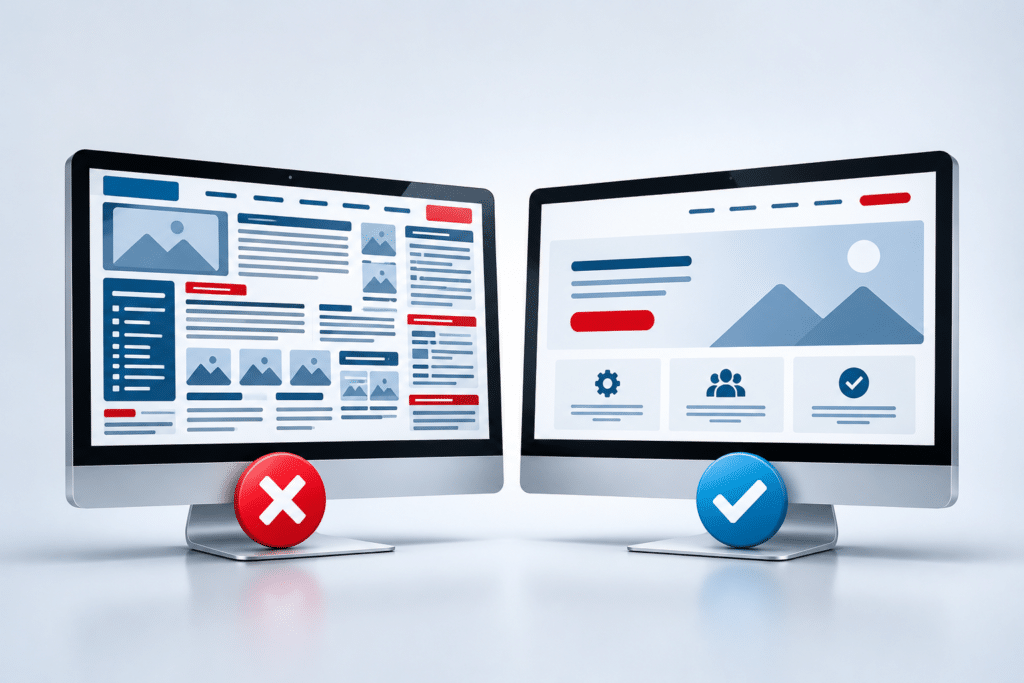

10 Questions Every Good Service Page Should Answer
A potential customer lands on one of your service pages because they want to know whether your business can help them. They may have found you through Google, followed a link from another page, or visited your website after hearing about your business elsewhere. Whatever brought them there, they usually have questions they want answered before they contact you.
The questions every service page should answer go far beyond simply explaining the name of the service. A useful page should tell visitors what you do, who the service is for, what problem it solves, what they can expect, why they should consider your business and what they need to do next.
When important information is missing, people are left to make assumptions. Some may contact you to ask basic questions, but others will simply leave and look at another business that makes the decision easier. A strong service page removes as much of that uncertainty as possible.
Quick Answer
The questions every service page should answer include: What is the service? Who is it for? What problems does it solve? What is included? How does the process work? How much does it cost? How long does it take? Where is it available? Why should someone choose your business? What happens next?
You do not necessarily need a separate section for every question. The aim is to give potential customers enough clear information to understand the service, decide whether it suits them and confidently take the next step.
Why do good service pages matter?
Your homepage normally gives visitors an overview of your business. A service page has a more focused job. It needs to help somebody understand a particular service well enough to decide whether they want to take the next step.
Think about someone searching for a local electrician because they need a consumer unit replaced. Finding an electrician’s website is only the beginning. The visitor may still want to know whether the electrician carries out that type of work, which areas they cover, what the job involves, whether they provide quotes and how to arrange a visit.
The same applies to an accountant, cleaner, beauty salon, landscaper or almost any other service business. Customers rarely make decisions based on a service name alone. They want enough information to reduce uncertainty.
This also fits with Google’s guidance on creating helpful, reliable, people-first content. Google encourages website owners to create content that leaves visitors feeling they have learned enough to help achieve their goal. A useful service page should therefore be written primarily for the customer, rather than simply filling the page with search phrases.
The questions every service page should answer
There is no single service page layout that every business must follow. A plumber’s boiler installation page will need different information from an accountant’s bookkeeping page or a beauty salon’s treatment page. However, there are several questions that apply to most service businesses.
1. What exactly is the service?
Start by explaining what you actually provide. This sounds obvious, but it is surprisingly easy for a business to assume that customers already understand industry terms. Use plain English and explain the service from the customer’s point of view.
For example, a cleaning company offering an end-of-tenancy cleaning service could explain what the service covers and what type of property it is intended for. An accountant offering payroll services could explain what they handle rather than relying on the word “payroll” to do all the work.
The visitor should not need specialist knowledge to understand your page.
2. Who is the service for?
Tell visitors who normally benefits from the service. Being specific can actually make a page more useful because people can quickly recognise whether it applies to them.
A landscaper might provide garden maintenance for homeowners, landlords and commercial premises. An accountant might offer a particular service for sole traders and small limited companies. A cleaner might specialise in offices rather than domestic properties.
You are not trying to exclude suitable customers unnecessarily. You are helping the right customers recognise that they are in the right place.
3. What problem does the service solve?
Customers are often more interested in the problem being solved than the technical details of the service. Explain what situation might cause someone to need your help and what the service is intended to achieve.
An electrician’s rewiring service is not simply about replacing cables. The customer may be concerned about an old electrical installation, repeated faults or renovation work. A bookkeeper is not simply entering figures into software. The business owner may want accurate records, less administration and better organised financial information.
Connecting the service to the customer’s actual problem makes the page easier to understand.
4. What is included?
Visitors should have a reasonable idea of what they are getting. You do not need to describe every tiny detail, but explain the main parts of the service.
This can also prevent misunderstandings. If a service includes an initial consultation, assessment, installation, clean-up and follow-up, say so. If something important is not normally included, it may also be sensible to explain that.
Clear scope helps customers compare services properly instead of making decisions based on assumptions.
5. How does the process work?
People often want to know what will happen after they make contact. A short explanation of your process can remove a lot of uncertainty.
For example, a local tradesperson’s process might be: initial enquiry, discussion of the job, site visit if required, quotation, agreed date and completion. An accountant may start with a consultation, review existing records, agree the work required and then begin the ongoing service.
Keep the process simple. Customers usually need the main stages, not an internal operations manual.
6. How much does it cost?
Price is one of the biggest questions many customers have. If you have fixed prices, packages or starting prices, consider making them clear. If every job is different, explain how you work out the price and how somebody can obtain a quote.
There are perfectly reasonable situations where an exact price cannot be given before you know more. A builder cannot realistically quote for an extension without knowing the size and specification. An accountant may need to understand the size and complexity of a business before providing an accurate fee.
In those cases, explaining the pricing process is still useful. “Contact us for a price” gives the visitor very little information, while explaining what affects the cost helps them understand why a quotation is needed.
7. How long will it take?
Time can be just as important as price. If there is a normal timescale, give visitors a realistic idea of what to expect. Where timing varies, explain the main factors that affect it.
A customer may want to know whether a repair can be completed in one visit, whether a decorating project will take two days or two weeks, or how soon an accountant can take over their bookkeeping.
Avoid promising timescales you cannot reliably meet. Useful information is better than an unrealistic promise.
8. Where do you provide the service?
This is particularly important for local businesses. Make it clear where you work so visitors do not have to hunt through your website to find out whether you cover their area.
You might list the main towns, districts or wider area you serve. Keep this accurate. Adding dozens of locations purely to attract search traffic is not helpful if you do not genuinely provide the service there.
Businesses that work remotely can explain that too. An accountant, consultant or other professional service may be able to work with customers across the UK rather than within one local area.
9. Why should someone choose your business?
A visitor may be comparing several businesses that appear to offer the same service. Your page should help them understand what makes your business a sensible choice.
Useful information could include relevant experience, qualifications, professional memberships, guarantees, specialist knowledge, your approach to customer service or something genuinely different about how you work. Only use claims you can support.
Try to avoid vague statements such as “we offer the best service” or “we are number one”. Specific information is more convincing because customers can judge it for themselves.
10. What happens next?
Do not make the visitor work out what they are supposed to do after reading the page. Give them a clear next step.
Depending on the service, that might be requesting a quote, booking an appointment, calling your business, completing an enquiry form or arranging an initial consultation.
The call to action should fit the service. Someone considering a large building project may not be ready to “Buy Now”, but they may be perfectly comfortable requesting a consultation or quotation.
What trust questions should your page answer?
Customers do not only ask factual questions. They also make quieter judgements while reading a website. They may be wondering whether the business looks genuine, whether it understands their problem and whether they would feel comfortable handing over money.
This is where useful trust information can help. Depending on your business, that could include genuine customer reviews, relevant accreditations, photographs of completed work, clear contact details, information about guarantees, realistic service information and an explanation of who will actually provide the work.
The strongest trust signals are usually specific and verifiable. A genuine qualification is stronger than calling yourself “highly qualified”. Real customer feedback is more useful than saying customers love your service. Clear facts allow visitors to reach their own conclusions.
Your service page should not be one long sales pitch
A service page needs to help your business generate enquiries, but that does not mean every paragraph needs to sell. Too much promotional language can make it harder for customers to find the information they actually need.
Useful pages answer questions first. They explain the service, remove uncertainty and make the next step obvious. The sales value comes from helping someone make a confident decision.
There is nothing wrong with explaining your strengths or encouraging someone to contact you. The difference is whether those claims are supported by useful information. “We have been providing this service for 15 years” tells the reader something. “We provide an unbeatable world-class service” tells them very little unless there is evidence behind it.
Different services need different answers
A common mistake is giving every service page exactly the same structure and changing only the service name. Customers may have completely different questions depending on what they are buying.
Someone looking for emergency plumbing help may care about response areas, availability and what types of problems can be handled. Someone choosing an accountant may care more about ongoing fees, communication, software, responsibilities and what records they need to provide.
Before writing or improving a page, imagine you were buying that particular service for the first time. Write down everything you would want to know before contacting the business. Customer emails, phone enquiries and questions you repeatedly receive can also reveal information that deserves a place on the page.
This is one reason good service pages often become stronger over time. Real customer questions can show you where the original page was unclear.
Expert Insight From Daren Ward

Daren Ward – Founder, A to Z Website Solutions
Having worked with business websites since 2004, one thing I’ve seen is that businesses can sometimes be too close to their own services. They know exactly what they do, so information that feels obvious to them never gets added to the website.
A potential customer does not have that inside knowledge. They may be visiting the business for the first time and comparing it with several alternatives. I would normally recommend reading a service page as though you know nothing about the company. If the page creates a question in your mind, check whether the answer should be on the page.
I also wouldn’t add information simply to make the page longer. A shorter page that answers the customer’s real questions is more useful than a huge page filled with repeated sales messages. The goal is clarity. Help the visitor understand the service, build confidence and make the next step easy.
Service Page Action Checklist
Open one of your current service pages and check whether a first-time visitor can easily find the following information:
- A clear explanation of the service in plain English.
- The type of customer the service is designed for.
- The problems or needs the service addresses.
- The main things included in the service.
- A simple explanation of how the process works.
- Useful pricing information or an explanation of how quotations are calculated.
- A realistic indication of timescales where appropriate.
- The locations or areas covered.
- Specific reasons someone might trust or choose your business.
- Answers to common objections or concerns.
- A clear way to contact you or take the next step.
- A page that works comfortably on a mobile phone as well as a desktop computer.
If several of these are missing, you do not necessarily need to rebuild the whole website. Improving the wording and structure of the existing service page may make it far more useful.
Frequently Asked Questions
How long should a service page be?
There is no ideal word count for every service page. The page should be long enough to answer the important questions a potential customer is likely to have without adding unnecessary information. A straightforward service may need much less explanation than an expensive or complicated service.
Should every service have its own page?
Often, yes, when the services are meaningfully different and customers need different information about them. A plumber offering boiler installation, bathroom plumbing and emergency repairs may be able to explain each service more clearly on separate pages than on one large general page.
Should I put prices on my service pages?
Include pricing when doing so is useful and practical. If you cannot give a fixed price, you could explain starting prices, typical pricing methods or the factors that affect a quotation. The important point is to avoid misleading customers when the final cost genuinely depends on the job.
Should a service page include customer reviews?
Relevant genuine reviews can help visitors judge your business, particularly when the feedback relates to the service they are considering. Avoid inventing testimonials or presenting anonymous marketing statements as customer feedback.
Should I include FAQs on every service page?
Only when there are useful questions worth answering. An FAQ section can be helpful when customers regularly ask about price, timescales, preparation, availability or what is included. Do not add repetitive questions purely because you think every page needs an FAQ section.
Can service pages help with SEO?
Clear service pages can help search engines understand what a page is about, but simply creating a page does not guarantee rankings. Useful content, technical accessibility, competition, website quality and many other factors can affect search visibility. Write the page to answer the customer’s needs first and apply SEO without making the wording unnatural.
Can clear service pages help AI systems understand my business?
Clear and well-structured information can make it easier for search engines and AI systems to understand what your business says it offers. However, there is no guaranteed method for making an AI system mention or recommend a business. Accuracy, accessibility and wider information about the business can all play a part.
Should service pages include the areas my business covers?
Yes, when location affects whether a customer can use the service. A local electrician, cleaner or landscaper should make genuine service areas easy to understand. Businesses providing remote services can instead explain whether they work locally, nationally or with customers in particular regions.
What should I do if customers keep asking something that is already on my website?
Check whether the answer is easy to find and understand. The information may technically be there but hidden in a long paragraph, placed too far down the page or written in language customers do not recognise. Repeated customer questions are useful clues about where a page could be improved.
How often should I review my service pages?
Review them whenever something important changes, such as pricing, service areas, processes, guarantees or what is included. It is also sensible to check pages periodically for outdated information, broken links and questions customers regularly ask that are not yet answered.
Summary
The best service pages do not leave potential customers guessing. They explain what the service is, who it helps, what is included, how the process works, what it may cost, how long it may take and what somebody should do next.
They also answer the less obvious questions behind a buying decision. Can I trust this business? Does it understand what I need? Does it work in my area? Is this service suitable for me? What will happen if I make contact?
You do not need to make every service page enormous. You need to make it useful. Start with the questions real customers ask, answer them in plain English and remove unnecessary uncertainty wherever you can.
Need help with your service pages?
If your current website does not explain your services clearly, improving the wording may be a good place to start. Our website copywriting service can help with clear website content, while our business website design service is available when the wider website needs attention.
A to Z Website Solutions has provided website design and online marketing services since 2004. If you prefer to improve the pages yourself, use the checklist above and start with the service that matters most to your business.
Key Takeaways
- Explain each service in plain English rather than assuming customers understand industry terminology.
- Make it clear who the service is for and what problem it solves.
- Explain what customers receive and what the process looks like.
- Give useful information about price, timescales and service areas where relevant.
- Use specific, genuine information to build trust rather than vague promotional claims.
- Answer the questions customers repeatedly ask your business.
- Give visitors a clear and appropriate next step.
- Write for customers first, then optimise the page for search without making it unnatural.