
Landing Page vs Website: What Is the Difference?
If you’re looking into getting your business online, you may have been offered a landing page, a full website or both. They can look similar at first, especially when each includes your logo, information about your services and a contact button. However, they usually serve different purposes, and choosing the wrong option could leave your business short of what it needs.
The landing page vs website decision starts with what you want customers to do. Are you promoting one specific offer, or do people need to explore your business before getting in touch? Understanding that difference helps you spend your budget on something that supports the way your customers actually buy.
What Is a Landing Page?
In marketing, a landing page usually means a page built around one particular offer and one main action. That action might be requesting a boiler installation quote, booking a beauty treatment or signing up for a café’s special event. The content helps visitors understand that offer and decide whether to take the next step.
There is also a broader meaning worth knowing. In advertising and website reports, a landing page can simply mean the first page someone arrives on. Google Ads uses the term for the page people reach after clicking an advert, so an existing service page or even your homepage can be a landing page in that context.
A purpose-built campaign landing page is more focused. It might contain a clear headline, the benefits of the service, genuine customer reviews, answers to common questions and an enquiry form. The same booking or quote button can appear several times without creating several different goals.
What Is a Full Website?
A full business website gives people room to learn about your business from several angles. It usually includes a homepage, service pages, an about page and contact information. Depending on your business, it might also include a gallery, prices, customer reviews, booking facilities or an online shop.
For example, an electrician might offer emergency repairs, rewiring, lighting installation and electrical inspections. Different customers will need different information about those services. Separate pages allow the business to explain each one properly without squeezing everything into a single long sales message.
“Full website” does not mean you need dozens of pages. A small, well-planned website can be enough for a straightforward business. What matters is whether customers can find the information they need and understand how to contact you.
Landing Page vs Website: The Main Differences
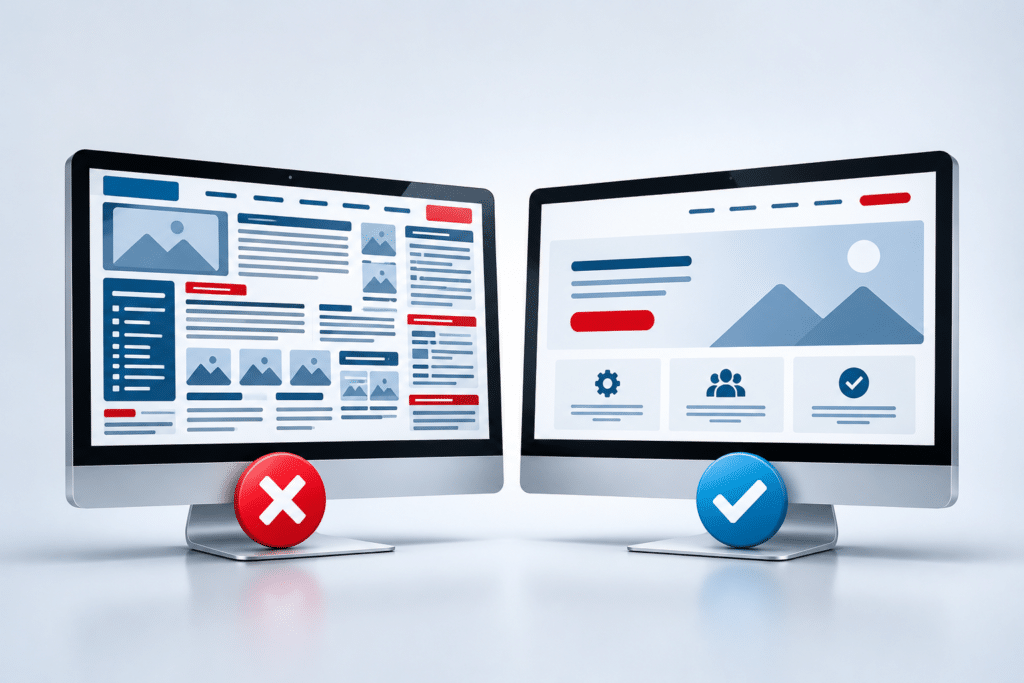
The biggest difference is focus rather than appearance. A landing page supports a particular decision, while a business website supports a wider range of customer needs. Both can look professional, work on mobile phones and include useful features.
| Feature | Campaign landing page | Full business website |
|---|---|---|
| Main purpose | Promote one offer and encourage one main action. | Explain the business and support several customer needs. |
| Content | Information closely related to a specific service, product or campaign. | Broader information about services, experience, work and contact options. |
| Navigation | Often simpler, with links chosen to support the visitor’s decision. | A menu connecting the main areas of the business. |
| Typical visitor | Someone responding to a specific advert, email or promotion. | Someone researching the business or exploring its services. |
| Useful measures | Relevant enquiries, bookings or sales from the campaign. | Enquiries, sales and how easily customers find useful information. |
| Relationship | Can sit within an existing website. | Can contain several focused landing pages. |
When Does a Landing Page Make Sense?
A landing page makes sense when you have a clear offer for a particular group of customers. Imagine a beauty salon promoting a new facial treatment through an email campaign. A dedicated page can explain the treatment, its price, who it suits and how to book, without asking visitors to search through every other salon service.
It can also help when you want to test interest in something new. A gardener could promote a seasonal garden tidy-up package before adding it more widely to the business. The page gives potential customers a clear way to enquire, while the owner can assess the quality of those enquiries.
However, a landing page does not bring visitors by itself. You still need a way for people to reach it, such as advertising, email, social posts, printed materials or links from your existing website. Planning that route is part of deciding whether the page is a worthwhile investment.
When Is a Full Website the Better Choice?
A full website is usually the stronger starting point when customers need to understand several services or check your business before making contact. A builder’s potential customers may want to see previous work, learn about the company and understand whether it handles extensions, renovations or smaller repairs. Those questions need more than a page promoting one offer.
It also gives you somewhere to send people who hear about you through word of mouth. A recommendation may get someone interested, but they could still want to check your services, area and contact details. Your website can help them do that at a time that suits them.
If you expect your business to grow, consider how easily the website can grow with it. You might later add a new service, a booking system or an online shop. Ask about those options before choosing a package, because the cheapest starting point may not be the easiest one to expand.
Can Your Business Use Both Together?
Yes, a website and landing pages can work together. Your website provides the wider business information, while individual landing pages support particular promotions. You do not automatically need a separate domain name or a second website to make this work.
For example, an accountant could have a website explaining bookkeeping, payroll and tax services. When promoting help with self-assessment returns, the business could send people to a focused page about that service. Visitors would get a relevant message while still having access to information about the firm.
Sometimes an existing service page already does the job well enough. If it clearly explains the offer, answers customer questions and makes enquiries easy, creating another page may add little value. The decision should come from what the visitor needs, rather than a rule that every promotion requires a new page.
How Do Cost and Value Compare?
A landing page often costs less than a multi-page website because the project covers a narrower scope. However, that is not a fixed rule. A page needing professional copywriting, payment facilities and a booking connection could involve more work than a simple brochure website.
When comparing quotes, check what is included beyond the design. Ask about writing, images, hosting, mobile usability, form testing and support after launch. Also find out whether there are ongoing platform fees and whether you can make routine changes yourself.
Judge value against the job you need done. A low-cost landing page may be sensible for one promotion but poor value if you immediately need several service pages. Equally, a large website could be an unnecessary expense when you already have a good site and only need a focused page for a new offer.
What About Google Searches and Advertising?
A landing page can appear in search results if it is accessible to search engines and suitable for indexing. However, a page covering one offer gives you less room to explain unrelated services. A multi-page website can provide dedicated information for different customer questions, although adding pages alone does not guarantee better rankings.
For advertising, the destination should match what the advert promises. If a cleaning company advertises end-of-tenancy cleaning, the linked page should make that service easy to find and understand. Google’s guidance on ads and landing pages recommends relevant information and easy navigation.
Keeping a page focused should not mean hiding information visitors need. They may still want to check who runs the business, how to contact it or what happens after submitting a form. A useful landing page supports those questions while keeping the main offer clear.
Frequently Asked Questions
Is a landing page the same as a homepage?
No, their usual purposes differ. A homepage introduces the business and directs people towards relevant information. A campaign landing page concentrates on one offer, although a homepage can also be called a landing page when it is someone’s first point of arrival.
Can a landing page be my only website?
It can act as your main online presence if your needs are very simple. However, check whether it gives customers enough information about your business, service and contact options. Supporting pages may still be needed, so a “single-page” package should not be judged by page count alone.
Is a one-page website always a landing page?
No, a one-page website may explain an entire business using sections for services, background and contact information. A campaign landing page is defined more by its focused purpose than by having one page. Ask what the proposed page will help customers understand and do.
Do I need a separate domain for a landing page?
Usually, you can publish it within your existing website. Some platforms also offer their own hosted addresses or options for connecting your domain. Check the arrangement before buying, particularly who controls the address and what happens if you leave the platform.
Should a landing page have a menu?
It can have a menu or useful links when they help visitors make an informed decision. There is no universal rule that every landing page must remove navigation. Keep links purposeful and make sure customers can find the information they reasonably need.
Will a landing page get more enquiries than my website?
It may improve results for a particular campaign when the offer and audience fit well. That does not mean it will outperform every website page. Compare the quality of enquiries and the cost of obtaining them before deciding whether the approach is working.
Can I sell a product from a landing page?
Yes, a landing page can promote a product and lead customers to a suitable checkout. Depending on the setup, payment might happen on that page or through a connected service. Check the buying process carefully, including confirmation messages and how orders reach your business.
How long should a landing page be?
It should be long enough to answer the questions that matter to the buyer. A simple café event may need less explanation than an expensive home improvement service. Clear, relevant information matters more than reaching a particular word count or keeping everything on one screen.
Can I expand a landing page into a full website later?
Sometimes, but it depends on the platform and how the page was built. Ask whether new pages and features can be added without starting again. If expansion is likely, make that part of the original brief rather than assuming it will be straightforward.
Summary
The landing page vs website choice depends on the information your customers need and the action you want them to take. A focused landing page suits a particular promotion, while a full website gives your business room to explain its wider services and background. Many small businesses benefit from combining the two.
Before spending money, be clear about your goal, how visitors will find the page and how you will handle enquiries. Those decisions make it easier to choose a sensible scope. They also give you a better way to judge the finished result than appearance or page count alone.
Need Help Choosing the Right Approach?
If you’re unsure whether your business needs a landing page, a full website or an improvement to an existing page, A to Z Website Solutions can help you consider the options. We’ve been providing website design and online marketing services since 2004. The starting point is understanding your business, your customers and what you want your website to achieve.