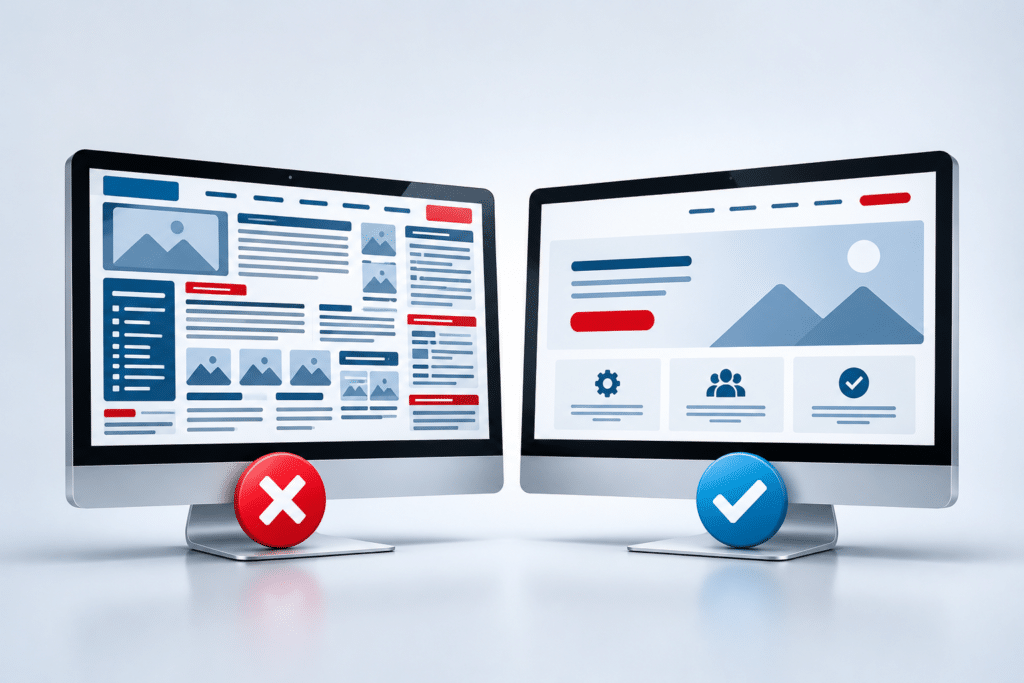

Is a Website Worth It If Most of My Customers Come From Word of Mouth?
If recommendations already keep you busy, spending money on a website can feel unnecessary. Your customers like your work, they tell their friends and new enquiries follow. Why pay for something when that approach is working?
So, is a website worth it for a business built on word of mouth? It can be, because a recommendation and a website often help at different stages of the same decision. The useful question is whether your website would help the right people feel confident enough to contact you.
Quick Answer
Yes, a website can be worth it even when most customers come from word of mouth. It gives referred customers somewhere to check your services, see your work and find the right contact details before making an enquiry. It also gives existing customers a useful link to share.
However, you don’t automatically need a large or expensive website. If you’re fully booked and happy with your workload, a small, well-kept site may be enough. Judge the investment by the enquiries it helps convert, the time it saves and the work you want to attract, rather than visitor numbers alone.
What Happens After Someone Recommends You?
A recommendation gives someone a reason to consider your business. It doesn’t necessarily answer every question they have. They may still want to know whether you cover their area, take on their type of job or offer the service they need.
Imagine a homeowner recommends a landscaper to a neighbour. The neighbour may want a complete garden redesign, while the original customer only had a fence repaired. A website showing both services helps the neighbour see whether the recommendation fits their project. This is an illustrative example, rather than a reported customer case.
A useful website can support that decision with genuine project photos, clear service descriptions and an explanation of what happens next. It doesn’t need to persuade someone from scratch when a friend has already spoken well of you. It needs to give them enough relevant information to take the next step.
Your website may help without getting the credit
Someone can hear about you from a friend, look at your website and then telephone you. When you ask how they found you, they may simply say, “My friend recommended you.” That answer explains where their interest began, but it doesn’t tell you everything that helped them decide.
This is why “all my customers come from word of mouth” doesn’t always mean your website has no role. Equally, it doesn’t prove that the website caused the booking. Asking whether customers looked at your site before contacting you gives a more useful picture than guessing either way.
Is a Website Worth It When Referrals Keep You Busy?
It depends on what you want your business to do next. If your diary is full, your customers are a good fit and your income meets your goals, attracting more enquiries may have little value. A website can still be useful for answering questions, explaining your availability and helping customers understand your process.
For example, a cleaner who only wants regular weekly customers can make that clear. An electrician can explain which areas they cover and which work they take on. A salon can direct customers towards its booking system and explain treatments before an appointment.
More enquiries aren’t always better enquiries
A website can help people decide whether you’re suitable before they call. That may reduce conversations about services you don’t provide or areas you don’t cover. It can also help attract work that better suits your skills, prices and schedule.
If recommendations already meet all your needs and a website would solve no clear problem, a major investment may not be justified. Start with the business goal, then choose the website around it. There’s no benefit in paying for features you won’t use.
Help Customers Recommend the Right Services
Customers often know you for the job you did for them. Someone who hired you to paint a bedroom may not know that you also decorate commercial premises. A bookkeeping client may not realise their accountant offers payroll support.
A website gives people a fuller explanation to share. Instead of trying to remember your services and contact details, they can send a link to a relevant page. The recipient then has information they can revisit when they’re ready to make a decision.
Give each main service enough space to explain who it suits, what it includes and how to enquire. Use actual photos where you have permission, and describe projects honestly. Avoid claims or qualifications that sound impressive but don’t accurately represent your business.
You can support referrals by putting your website address on invoices, email signatures and printed materials. Ask satisfied customers to share the page that matches their friend’s needs. Keep the request relaxed, and let genuine recommendations do their work.
What Should a Referral-Focused Website Include?
The right starting point is a website that answers the questions referred customers actually ask. Some businesses can do this well on one page. Others need separate service pages so visitors can understand different kinds of work without reading through unrelated information.
- A clear introduction: Explain what you do, who you help and where you work.
- Useful service information: Describe the work you take on and any important limits.
- Genuine evidence: Show relevant work, accurate credentials and customer feedback used with permission.
- A simple next step: Make calling, requesting a quote or booking straightforward.
- Current details: Keep your telephone number, opening hours and service areas accurate.
- A comfortable mobile experience: Make text readable and contact links easy to use on a phone.
For a builder, photographs and explanations of completed work may matter most. For an accountant, the priority might be the types of clients served and how the first meeting works. Choose content around the customer’s decision, rather than adding sections because another business has them.
Agree who will maintain the site after launch. Prices, availability and services can change, and contact forms need checking. A small website with accurate information is more helpful than a larger one that nobody keeps up to date.
Are Facebook and Google Profiles Enough?
They may be enough for some businesses, especially when customers only need basic details and a way to contact you. A well-kept profile can show reviews, recent activity and opening hours. If that already supports your referrals effectively, consider what extra job a website would perform before spending money.
A website gives you more control over how you organise your service information and present your work. You can guide someone through a treatment, explain a quotation process or show projects by type. Your social profiles and website can then support each other, with consistent details across both.
Google’s guidance on improving local ranking explains that local results depend on relevance, distance and how well-known a business is. It also advises providing complete business information. Having a website doesn’t guarantee a high position in local search, so avoid judging the investment on promised rankings.
How to Work Out Whether the Cost Makes Sense
Look at the total cost over a sensible period, such as the first year. Include design, your domain name, hosting, maintenance and any paid booking tools. Also allow for your own time spent supplying content or managing updates.
Then compare that cost with the value of work the website could realistically help you win. Use the money left after the costs of delivering the work, rather than the full invoice amount. This gives you a more useful starting point for deciding whether the investment is proportionate.
A simple example using illustrative figures
Suppose a website costs £1,200 in its first year, and an additional completed job leaves £300 after its direct costs. Four genuinely additional jobs would cover that website cost on this simplified basis. These figures are examples, not a quote, a prediction or a full accounting calculation.
The difficult part is deciding which jobs are additional. A customer who would have booked anyway shouldn’t automatically count as a new sale caused by the website. Time saved, easier booking and better-fit enquiries can also have value, but keep those benefits separate from sales you can reasonably measure.
Ask two questions when a new customer contacts you
Ask, “How did you first hear about us?” and “Did you look at our website before getting in touch?” Record the answers alongside whether the enquiry became paid work. Over time, this helps you see both the source of the referral and whether the website supported the decision.
A few relevant enquiries can matter more than hundreds of visits from people who will never buy. Review the quality of enquiries, completed jobs and repeated questions over several months. If the site isn’t helping, look at the content and contact process before assuming you need a complete rebuild.
Expert Insight From Daren Ward
Daren Ward – Founder, A to Z Website Solutions
I would recommend reviewing your website as though you’ve just been given your business name by a friend. Start with the questions that person would have, rather than the design features you’d like to add. Can they tell whether you do their kind of work, serve their area and offer a clear next step?
Also check whether your site reflects the business you’re running now. If you want more commercial work but every example shows small domestic jobs, visitors may get a narrow picture of what you offer. Improving that message can be a more sensible first step than buying a bigger website.
Action Checklist
- Decide whether you want more work, different work or less time spent answering questions.
- List the five questions referred customers most often ask before booking.
- Check that your website answers those questions accurately.
- Open the site on your phone and test calling, booking and sending an enquiry.
- Ask someone unfamiliar with your business to find your services and coverage area.
- Calculate first-year and renewal costs before agreeing to a website package.
- Record how new customers heard about you and whether they used your website.
- Review enquiries and completed work after an agreed period, rather than checking visits alone.
Frequently Asked Questions
Do I need a website if I’m already fully booked?
You may still benefit from one, but your priority could be managing enquiries rather than increasing them. Explain the work you accept and how customers should contact you. If there is no useful business goal behind a larger site, keep the investment modest.
Can a one-page website be enough?
Yes, if your services are straightforward and the page answers customers’ main questions clearly. Separate pages become more useful when different services need detailed explanations. Choose the structure around the information people need, rather than a fixed page count.
Does a website replace word-of-mouth marketing?
No, it can support it by giving referred customers somewhere to learn more. Good service and genuine recommendations remain valuable. Share relevant website pages when they help people understand your work.
Will a website automatically bring in new customers?
No, publishing a website doesn’t guarantee enquiries or sales. People need a way to discover it, and the content needs to give them a reason to act. Sharing it with referred customers is one practical place to start.
Should I put prices on my website?
Include prices when they help customers make a fair decision and you can explain them accurately. Fixed prices or clear starting prices can suit some services. For bespoke work, explain what affects the quote and what details you need.
What if I don’t have professional photographs?
Clear, genuine photographs can still be useful if they show the work accurately. Get any permissions needed before publishing them. Avoid using stock images in a way that suggests they show projects you completed.
Do I need to pay for monthly SEO?
Not necessarily, especially if your main goal is helping people who already know your business name. Ongoing search work serves a different goal: attracting relevant search visitors over time. Ask what specific need a monthly service would address before committing.
How often should I update a small website?
Update it whenever important business details change, and check it regularly for accuracy. Keep technical maintenance separate from content updates, because software and security needs depend on the system used. Agree who handles each responsibility.
Summary
Word of mouth can bring someone to your business, while a website helps them decide whether to contact you. Its value may come from supporting referrals, explaining your services or making enquiries easier. Those benefits need to match what you actually want from the business.
Start with a clear purpose and a sensible budget. Build enough website to do that job, keep it accurate and review the results. You can expand later if your services, customer needs or growth plans justify it.
Need Help Deciding What Your Business Needs?
A to Z Website Solutions has provided website design and online marketing services since 2004. If you want a site that supports your referrals, explore our business website design service and discuss the goals you want it to meet. The right starting point is a clear brief around your customers and your business.
If you already have a website, you can request a free website audit to identify potential issues with its performance and usability. Use the findings alongside customer feedback to decide which improvements deserve attention. A technical audit alone won’t tell you how many referrals become customers.
Key Takeaways
- A recommendation and a website can support different stages of the same customer decision.
- A referral-focused site should explain your services, show genuine evidence and make contact easy.
- A small website may be enough when you don’t need more enquiries.
- Compare total costs with realistic business benefits, using profit rather than sales alone.
- Ask customers both where they heard about you and whether they checked your website.
- Measure useful enquiries and completed work alongside visitor numbers.