
How Can I Promote My Small Business Without Paying for Advertising?
Running a small business is expensive enough without having to pay for adverts every time you want to attract a new customer. Whether you’re a plumber, hairdresser, accountant, cleaner or shop owner, finding affordable ways to bring in business can make a real difference to your monthly costs.
You might already have a website and social media accounts, but perhaps they aren’t bringing in as many enquiries as you’d like. Or maybe you’re just starting out and don’t have money to spend on Google Ads, Facebook advertising or printed promotions.
The encouraging part is that you don’t always need a paid advertising budget to make people aware of your business. You do, however, need to invest some time, build trust and give potential customers a reason to choose you.
Quick Answer
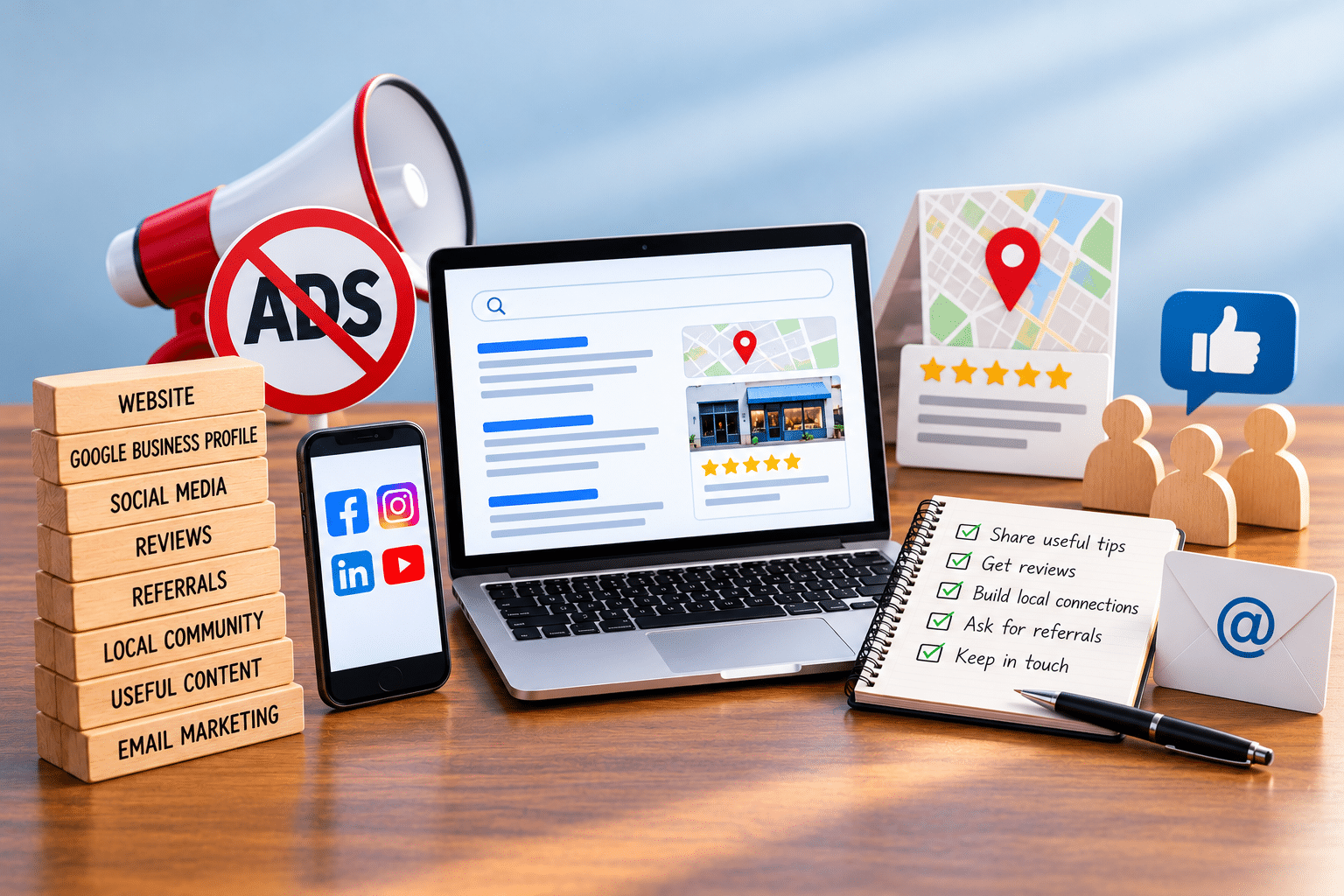
You can promote your small business without paying for advertising by improving your Google Business Profile, making your website easier to find, sharing useful social media content, asking customers for reviews, encouraging referrals and building relationships with other local businesses.
Start with the places where your potential customers already look for services like yours. Keep your business details accurate, show examples of your work and make it easy for people to contact you. These methods don’t require advertising fees, although they do take time and effort. For most small businesses, using a few methods consistently is more practical than trying everything at once.
What Does Free Business Promotion Really Mean?
Free business promotion means attracting attention, enquiries or customers without paying to place adverts. It includes activities such as appearing in local searches, sharing helpful information, collecting reviews and getting recommendations from satisfied customers.
But free doesn’t mean effortless. Writing a useful Facebook post, updating your website or attending a local networking event all take time. Some activities may also involve optional costs, such as website hosting, email software or travel to community events.
The important difference is that you aren’t paying an advertising platform every time you want your business to be seen. Some activities, particularly useful website content and customer reviews, can continue helping your business after the initial work has been completed.
1. Improve Your Google Business Profile
For many businesses serving a particular area, a Google Business Profile is a sensible place to start. It’s a free business listing that can help eligible businesses appear on Google Search and Google Maps when people look for nearby services.
For example, someone searching for an electrician in [Your Area] may see local business listings alongside other search results. A complete, accurate profile can help that person understand what you offer, where you work and how to contact you.
What should you improve first?
- Check that your business name, phone number and website are correct.
- Choose the most accurate primary business category.
- Add a clear description of your services.
- Set appropriate opening hours and keep holiday hours updated.
- Add genuine photos of your work, products or business.
- Respond professionally to customer reviews.
- Keep your profile accurate when services or contact details change.
If you visit customers at their homes or premises and don’t serve customers at your own address, check Google’s rules for service-area businesses. You may need to hide your address and show the areas you serve instead.
Google explains that local results are mainly influenced by relevance, distance and prominence. Completing your profile is useful, but no one can guarantee a particular position in local search. You can read Google’s official guidance on improving local ranking.
If you’d prefer help reviewing and improving your listing, Google Business Profile Optimisation is one option to explore.
2. Make Your Website Work Harder Without Paying for Advertising
Your website can help people discover your business through unpaid search results, often called organic search. Unlike paid adverts, you don’t pay Google each time somebody clicks on an ordinary organic result.
However, having a website doesn’t automatically mean customers will find it. Your pages need to explain what you do, who you help and where your business operates. They should also answer the questions people commonly ask before contacting you.
Give each important service a clear explanation
Imagine you run a cleaning company offering domestic cleaning, office cleaning and end-of-tenancy cleaning. A website with only a short paragraph saying “We offer professional cleaning services” gives visitors very little information.
Separate, useful explanations of those services could help customers understand what is included, whether you cover their location and how to request a quote. This also gives search engines clearer information about your business.
Make contacting you easy
Check that your telephone number is easy to find, your contact form works and your pages look good on a mobile phone. If someone visits your website and cannot quickly understand how to book or enquire, you could lose a potential customer even after they’ve found you.
Good search visibility usually takes time, and results are never guaranteed. Google’s SEO Starter Guide explains the basics of making content easier for search engines to understand.
4. Turn Customer Reviews Into Trust
Customer reviews can help potential buyers feel more confident about choosing your business. People often want reassurance that a company is reliable, communicates clearly and delivers what it promises.
When a customer is happy with your work, ask politely whether they would be willing to leave an honest review. You can make this easier by sending a direct link to your review profile after the job is complete.
Don’t ask customers to leave only positive reviews, offer rewards in exchange for reviews or write reviews yourself. Google prohibits incentivised and fake engagement, and UK consumer protection rules also apply to misleading reviews.
Reply to reviews professionally, including negative ones. A thoughtful response can help future customers see how you handle problems, even when something hasn’t gone to plan.
5. Encourage Recommendations and Referrals
One of the simplest ways to promote a small business is to make it easy for satisfied customers to recommend you. A recommendation from someone they trust may encourage a potential customer to contact you.
For example, a plumber who completes a job professionally could ask the customer to keep their details in case a friend or neighbour needs similar work. A hairdresser could remind regular customers that new appointments are welcome.
You don’t need an expensive referral scheme. A friendly request, a memorable business name and a convenient way to share your contact details may be enough to get started.
How can you make referrals easier?
- Ask at a natural point, such as after a successful job.
- Send customers your website or booking link.
- Make sure your contact information is easy to share.
- Thank customers who recommend you.
- Keep delivering the standard of service that earned their trust.
Remember that referrals depend on customers being happy enough to recommend you. They shouldn’t be treated as a guaranteed source of new business.
6. Build Relationships With Other Local Businesses
Other small businesses can sometimes introduce you to customers who need your services. The best partnerships are based on genuinely complementary work rather than simply exchanging promotional messages.
For example, a decorator might build a relationship with a local flooring company. An accountant could connect with a bookkeeper, while a wedding photographer might work alongside a florist or venue.
Start by introducing yourself and understanding what the other business offers. You might recommend each other when appropriate, share useful information or collaborate on a local event.
Be careful not to promise referrals you cannot provide or recommend businesses you don’t trust. Your own reputation is connected to the people you suggest to customers.
7. Get Involved in Your Local Community
Local communities can provide opportunities to introduce your business without buying advertising. These might include neighbourhood groups, community events, business associations and local networking meetings.
If you run a café, you could participate in a community event. A gardening business might share seasonal advice in an appropriate local group. A tradesperson could answer general questions about home maintenance without turning every conversation into a sales pitch.
Always check group rules before promoting your services. Some communities allow business posts on certain days, while others restrict advertising completely. Respecting those rules helps you build a better reputation.
Community involvement works best when you contribute something useful and build real relationships. It may take longer than paying for an advert, but it can help people become familiar with your business.
8. Share Useful Advice That Customers Are Searching For
Helpful content can introduce your business to people who haven’t heard of you before. This could be a blog article, a short video, a simple checklist or an answer to a question customers regularly ask.
Imagine you own a garage. An article explaining what to check before an MOT could be useful to local drivers. A cleaning company might publish advice on preparing an office for a deep clean. A beauty salon could explain what customers should know before booking a particular treatment.
The aim is to answer a real question, not to fill your website with pages simply to attract search traffic. Useful content should be accurate, clear and relevant to the services you provide.
Where do content ideas come from?
Start with the questions your customers already ask. Think about what people want to know before they book, what mistakes they commonly make and what information helps them choose the right service.
One useful article can also give you ideas for several social media posts. This makes your time go further without having to create completely new material for every platform.
9. Keep in Touch With Existing Customers
Attracting new customers is only part of marketing. Staying in touch with people who have already used your business can encourage repeat bookings, enquiries and recommendations.
A gardening company might remind customers about seasonal maintenance. A garage could send appropriate service reminders, while a salon might share appointment availability or useful aftercare advice.
Email can be an affordable way to do this, but it isn’t automatically free. Some services offer limited free plans, while others charge based on features or contact numbers.
You must also follow UK privacy and electronic marketing rules. Don’t assume that having someone’s email address means you can send them promotional messages. The Information Commissioner’s Office provides guidance on direct marketing and electronic communications, including consent and relevant exceptions.
10. Which Free Marketing Methods Should You Choose First?
The best method depends on how customers normally discover and choose your business. A local emergency plumber may benefit from a different approach to an accountant who works mainly with other companies.
Rather than trying ten marketing activities at once, choose two or three that fit your business and your available time.
| Business situation | Good starting point | What to measure |
|---|---|---|
| Local service business | Google Business Profile and customer reviews | Calls, enquiries and direction requests |
| Business with repeat customers | Customer follow-ups and referrals | Repeat bookings and recommendations |
| Visual business such as landscaping or beauty | Photos, social posts and completed-work examples | Messages, bookings and enquiries |
| Professional service such as accountancy | Helpful articles, LinkedIn and business relationships | Qualified enquiries and introductions |
| New business with few customers | Accurate listings, community connections and useful content | First enquiries and where customers heard about you |
A simple 30-day promotion plan
During the first week, check your business listings, website contact details and service descriptions. In the second week, ask recent customers for honest reviews where appropriate and prepare two helpful social media posts.
Use the third week to contact a few suitable local businesses and publish a useful answer to a common customer question. During the fourth week, review what happened. Look at actual enquiries, conversations and bookings rather than judging success by likes or views alone.
This won’t provide a complete picture of long-term results, but it can help you decide which activities deserve more attention next month.
11. Common Mistakes to Avoid When Promoting Your Business for Free
Free marketing can waste time when activities aren’t connected to a clear business goal. Being busy on social media doesn’t necessarily mean you’re reaching people who are likely to become customers.
- Trying every platform: Choose the channels your customers actually use.
- Posting only promotions: Mix service information with genuinely useful advice.
- Ignoring your website: Check that people can find your contact details and understand what you offer.
- Buying fake followers or reviews: These can damage trust and may break platform rules or consumer law.
- Expecting immediate results: Organic promotion often requires repeated effort.
- Failing to measure enquiries: Ask new customers how they found you and keep a simple record.
- Neglecting existing customers: Repeat business and referrals deserve attention too.
Another mistake is assuming free marketing has no cost. Your time has value, especially when you’re also responsible for serving customers and running the business. Review whether an activity is producing enough benefit to justify the hours involved.
Expert Insight From Daren Ward

Daren Ward
Founder, A to Z Website Solutions
Having worked in website design and online marketing since 2004, my advice is to look at what happens after somebody discovers your business, not just how many people see it.
For example, if someone finds your cleaning company on Google but your website doesn’t explain which areas you cover, that person may leave without making an enquiry. Getting more visitors won’t necessarily solve that problem.
I would normally recommend making sure your existing website, business listings and contact details are doing their job before spending hours trying to reach more people. Then choose one or two promotion methods you can maintain consistently.
It’s also worth asking every new customer how they heard about your business. Over time, those answers can show you which activities are bringing in genuine opportunities rather than just attention.
Your Free Business Promotion Action Checklist
- ☐ Check your Google Business Profile details and opening hours.
- ☐ Review your website on a mobile phone and test the contact form.
- ☐ Make sure your main services and locations are clearly explained.
- ☐ Ask suitable recent customers for honest reviews.
- ☐ Prepare two useful social media posts for the coming week.
- ☐ Identify three complementary local businesses to introduce yourself to.
- ☐ Write down five questions customers regularly ask.
- ☐ Turn one customer question into a helpful website article or video.
- ☐ Check your permissions before sending marketing emails.
- ☐ Record where your new enquiries come from over the next month.
Frequently Asked Questions
1. Can I really advertise my small business for free?
Yes, you can promote your business without paying for adverts through free business listings, ordinary social media posts, customer recommendations and local networking. These methods still require time and effort, and some supporting tools may have costs. They also don’t guarantee that people will see your business or become customers.
2. What is the best free way to attract local customers?
For an eligible local business, improving its Google Business Profile is often a sensible starting point. It helps potential customers find useful information about the business on Google Search and Maps. Customer reviews, a clear website and local recommendations can support that effort.
3. How can I promote a new business with no customers?
Start by creating accurate business listings, explaining your services clearly and introducing yourself to relevant local communities. You can also publish useful content that answers common customer questions. Since you won’t have genuine customer reviews yet, focus on being transparent about what you offer and making enquiries easy.
4. Do I need a website to promote my business for free?
No, you can begin with a business listing, social media profile and personal recommendations. However, your own website gives customers a central place to understand your services and contact you. It also allows you to publish helpful information that may be discovered through unpaid search results.
5. Is Facebook still useful for small business promotion?
Facebook can be useful when your customers are active there, particularly for local community connections and businesses with visual work to share. Free posts won’t necessarily reach everyone who follows your page. Test relevant content and judge its value by meaningful conversations and enquiries.
6. How long does free business marketing take to work?
There isn’t one reliable timescale. A recommendation from an existing customer might produce an enquiry quickly, while useful website content may take months to attract regular search visitors. Your location, competition, services and consistency all influence results. Measure progress over time rather than expecting immediate success.
7. Can I appear on Google without paying for Google Ads?
Yes. Google displays unpaid organic search results, and eligible businesses can also appear in local results through their Google Business Profile. Paying for Google Ads is not required for either. However, creating a profile or publishing a website doesn’t guarantee a particular search position.
8. Should I offer discounts to get people to recommend my business?
Not necessarily. Good service and a polite request can encourage genuine recommendations without discounts. If you choose to introduce a referral reward, make the terms clear and consider the cost. Never offer rewards in exchange for Google reviews, as that conflicts with Google’s review policies.
9. Can I promote my business in local Facebook groups?
Yes, where the group’s rules allow business promotion. Some groups have dedicated promotional days, while others don’t allow adverts. Introduce your business appropriately, contribute useful answers and avoid repeatedly posting the same sales message. Respecting the community usually creates a better impression.
10. How do I know whether my free marketing is working?
Track enquiries, bookings, phone calls and the number of customers who say they found you through a particular channel. Ask new customers how they heard about your business and record their answers. This is often more useful than looking only at social media followers, likes or website visitor numbers.
Summary: Promoting Your Business Without an Advertising Budget
Promoting a small business without paid advertising is possible, but it requires a sensible plan and regular effort. Your website, Google Business Profile, customer reviews, referrals and community relationships can all help people discover and trust your business.
Begin with the opportunities that are most relevant to your customers. Make sure your business information is accurate, your services are easy to understand and people can contact you without difficulty. Then build on what works rather than spending time on every marketing channel available.
If you would like help improving how customers find your business online, you can explore our SEO and AI Visibility service. It is one option for businesses that want professional support alongside their own marketing efforts.
Key Takeaways
- You don’t need to buy adverts to begin promoting a small business.
- A complete, accurate Google Business Profile can support local discovery.
- Your website should clearly explain your services and make enquiries easy.
- Useful social media content can be more valuable than constant sales posts.
- Genuine reviews and customer referrals help build confidence.
- Local partnerships and community involvement can introduce new opportunities.
- Free marketing still requires time, effort and consistent attention.
- Measure actual enquiries and bookings to decide where to focus next.
Found This Helpful? Share It
If you found this article useful, please share it with other business owners who might find it helpful too.
A quick share on LinkedIn, Facebook or your favourite social platform could help someone else find the advice they need.




3. Use Social Media Without Paying for Ads
Social media can help your business stay visible to people who already know you and introduce your services to others. You can publish ordinary posts on platforms such as Facebook, Instagram and LinkedIn without purchasing advertising.
Not every post will reach a large audience, and free social media reach can change depending on the platform and how people respond. That’s why it’s better to share information your customers genuinely care about rather than posting sales messages every day.
What should a small business post?
Choose the platforms that fit your customers. A business serving homeowners might find local Facebook communities useful, while an accountant working with other businesses may prefer LinkedIn.
A manageable starting point is two useful posts each week. Once you know which posts encourage conversations, website visits or enquiries, you can adjust your approach. If creating and scheduling content becomes difficult to manage, social media management may be worth considering.