
Google Business Profile vs Website: Do You Need Both?
If you run a local business, you might wonder whether you really need a website when you already have a Google Business Profile. After all, your profile can show your phone number, opening hours, reviews, photos and location directly in Google Search and Maps.
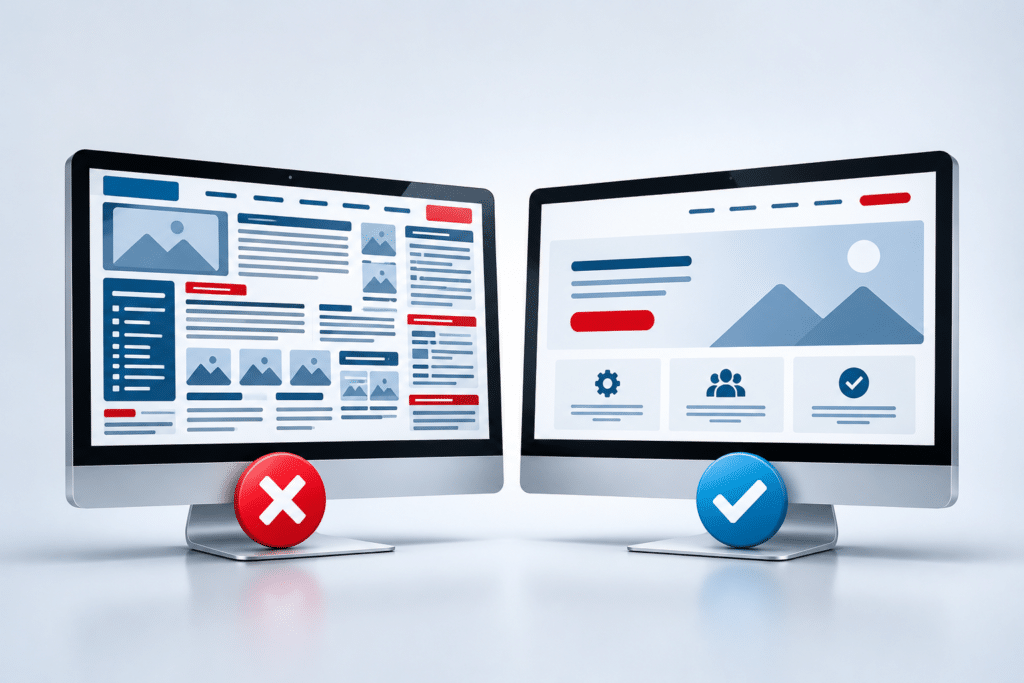
That can make a Google Business Profile feel like a replacement for a website. In practice, the two do different jobs. Your Google Business Profile can help people discover your business locally, while your website gives you far more space and control to explain what you offer, answer questions and turn interest into an enquiry, booking or sale.
For many eligible local businesses, the strongest approach isn’t choosing one or the other. It’s getting your Google Business Profile and website working together.
Quick Answer
Do you need both a Google Business Profile and a website? For many local businesses, having both is the better option. A Google Business Profile helps eligible businesses appear across Google Search and Maps, while a website gives you your own online space to explain services, show your work, answer questions and encourage enquiries. Google also allows a Business Profile to link directly to a business website. Rather than competing with each other, the profile and website can support different parts of a customer’s journey.
Google Business Profile vs Website: What’s the Difference?
A Google Business Profile is a listing managed through Google’s platform. For eligible businesses that meet customers face-to-face, it can display business information in Google Search and Google Maps, including details such as your telephone number, opening hours, website, location or service area, photos and reviews.
Your website is different because it is your own dedicated online presence. You decide what pages it contains, how your services are explained, what images are shown and how visitors are encouraged to contact you. It can contain far more information than would make sense inside a business listing.
| Google Business Profile | Business Website |
|---|---|
| Appears within Google’s Search and Maps products | Provides your own dedicated online presence |
| Useful for local discovery | Useful for explaining your business in depth |
| Can display reviews | Can provide detailed service, product and company information |
| Can display opening hours and contact details | Can include contact forms, quote requests, booking journeys and other features |
| Uses Google’s layout and features | Gives you much greater control over design, content and structure |
| Can link people to your website | Can provide the detailed information someone needs after finding you |
The important point is that these aren’t two versions of the same thing. They have different strengths and can support each other.
What Does a Google Business Profile Do?
Google describes a Business Profile as a way for eligible businesses to manage how they appear on Google Maps and Search at no charge. A profile can include information such as opening hours, contact details, website, location or service area, photos and customer reviews.
This can be particularly useful when someone has strong local intent. Imagine someone searches for an electrician nearby because a socket has stopped working. They may want to quickly see local businesses, reviews, opening times and contact information rather than read several pages of a website first.
Google says local results are mainly based on three factors: relevance, distance and prominence. Keeping your profile complete and accurate can help Google understand the business and match it with relevant local searches.
A profile also provides ways for customers to interact with a business. Depending on the business and available features, this can include visiting its website or using supported booking, reservation or ordering links.
A Google Business Profile is especially useful for quick decisions
Think about a customer looking for a café while walking through town, a homeowner trying to find a nearby plumber, or someone checking whether a beauty salon is open. In these situations, the information shown directly within Google can help someone make a quick decision.
But not every buying decision is quick. Someone considering a larger building job, choosing an accountant or comparing landscaping companies may want much more information before making contact. That’s where the website becomes particularly useful.
What Does a Business Website Do?
A website gives customers somewhere to properly explore your business. Instead of trying to fit everything into a listing, you can create individual pages for important services, explain how you work, answer common questions and make the next step clear.
For example, a plumbing company might have separate pages covering boiler repairs, emergency plumbing, bathroom installations and areas served. An accountant might explain bookkeeping, payroll, tax returns and support for limited companies. A beauty salon could provide treatment information, prices, preparation advice and booking options.
This extra detail matters because people don’t always contact the first business they find. They may compare several companies before deciding which one feels right for them.
Your website gives you more control
With your own website, you have far more control over the information and experience you provide. You can decide which services deserve their own pages, which questions need answering and which action you want visitors to take.
You can also update and expand the site as your business changes. If you introduce a new service, start covering another area or need a page for a particular offer, you aren’t limited to the fields and layout provided by a third-party profile.
Why Can a Local Business Benefit From Both?
For an eligible local business, a Google Business Profile can help with discovery while the website can help with research and decision-making. One may introduce the business, while the other gives the potential customer the detail they need before making contact.
Suppose someone searches for a local cleaning company. They might first notice the company in local Google results and check its rating, opening hours and photos. They may then visit the website to find out whether the company offers regular domestic cleaning, end-of-tenancy cleaning or office cleaning in their area.
The same pattern can apply to an electrician, builder, garage, accountant, restaurant or beauty salon. Customers often move between search results, profiles and websites rather than using just one source of information.
How Do Your Profile and Website Work Together?
A useful way to think about the relationship is to view your Google Business Profile as one possible doorway to your business and your website as somewhere the customer can continue their research.
A typical journey might look like this:
- A potential customer searches Google for a local service.
- They notice your business in Search or Maps.
- They check your reviews, photos, opening hours and basic information.
- They select the website link because they want more detail.
- They read about the service they need.
- They check areas covered, FAQs or other useful information.
- They decide whether to phone, complete an enquiry form, request a quote or book.
Not every customer will follow those exact steps. Some will phone directly from the profile. Others might find your website through Google’s normal organic search results without seeing your Business Profile first.
That’s one reason relying on a single route into your business can be limiting. Different customers search and make decisions in different ways.
Can Your Website Help With Local Search?
Yes. Your website can contribute useful information about your business and support your wider local search presence. Google states that information in local listings can come from several sources, including publicly available information such as content crawled from a business’s official website.
Google also says prominence in local results can be influenced by information about a business from across the web, including links. Its local ranking guidance also states that a business’s position in normal web results is a factor, which means standard SEO practices remain relevant to local search.
A useful local business website should therefore make the basics clear. It should explain what the business does, where it operates, how customers can make contact and what individual services are available.
Google also supports LocalBusiness structured data. This is information added to a website’s code that can help Google understand details about a local business. Structured data doesn’t guarantee better rankings or special search results, but it can provide clearer machine-readable information about the business.
Can You Have a Website Without a Google Business Profile?
Yes. A business can have a website without having a Google Business Profile, and some businesses aren’t eligible for a Business Profile in the first place. Google states that Business Profiles are intended for businesses that make face-to-face contact with customers, such as businesses with a location customers can visit or service providers that visit customers.
Google says online-only businesses that don’t meet customers in person aren’t eligible for a Business Profile. A website can therefore be the main online destination for businesses that operate entirely online.
If your business is eligible for a Business Profile and relies heavily on local customers, however, ignoring the profile could mean missing a useful way for people to discover and check your business within Google Search and Maps.
Can You Use a Google Business Profile Without a Website?
Yes, an eligible business can have a Google Business Profile without its own website. For a very small or newly started local business, a well-completed profile may provide enough basic information for some customers to make contact.
The limitation appears when someone wants more detail than the profile comfortably provides. A customer considering an expensive job may want to understand your services, how the process works, what areas you cover and what makes your business suitable for their needs.
A website gives you room to answer those questions properly. It can also create dedicated pages around individual services and customer needs rather than expecting one business listing to explain everything.
What happens if your business grows?
A simple profile might be enough when you offer one straightforward service in a small area. As the business grows, you may add services, team members, locations, booking options, FAQs or other information that customers need before contacting you.
A website provides the flexibility to organise that information properly. It becomes a central place you control and can continue developing as the business changes.
Keep Your Business Information Consistent
If you use both a website and Google Business Profile, make sure customers aren’t seeing conflicting information. A profile saying you close at 5pm while the website says 6pm creates unnecessary confusion. The same applies to phone numbers, addresses, service areas and other important business details.
Google recommends keeping Business Profile information complete and accurate. Your website should also be reviewed whenever important business details change.
It is sensible to check:
- Business name
- Telephone number
- Address where applicable
- Service areas
- Opening hours
- Main services
- Website link from your Google Business Profile
- Booking or action links where applicable
This isn’t about forcing identical wording everywhere. It is about making sure the factual information a customer relies on doesn’t contradict itself.
Expert Insight From Daren Ward

Daren Ward
Founder, A to Z Website Solutions
From my experience working with business websites and online marketing since 2004, I wouldn’t look at a Google Business Profile and a website as an either-or decision for an eligible local business. They solve different parts of the problem.
Your profile can help someone discover and quickly check your business. Your website can then answer the questions that don’t fit neatly into a profile. If someone is thinking about spending hundreds or thousands of pounds with a business, they may want more than a phone number, a few photos and some reviews before deciding who to contact.
I would normally recommend looking at the journey as a whole. Can people find you? When they do, can they quickly understand what you offer? If they want more information, is there somewhere useful to send them? And once they are interested, is it obvious how to take the next step? Your profile and website should support that journey rather than being treated as completely separate marketing tools.
Action Checklist
- Search for your business name on Google and check what customers currently see.
- Make sure your Google Business Profile is claimed and verified if your business is eligible.
- Check that your telephone number, opening hours and other important details are accurate.
- Add your correct website address to your Business Profile.
- Check that the website clearly explains your main services and areas covered.
- Make sure important services have enough information for customers to make an informed decision.
- Check that the website works properly on a mobile phone.
- Make it easy for customers to call, enquire, request a quote or book.
- Review your profile and website whenever your business details change.
- Keep genuine customer reviews, useful photos and business information up to date where appropriate.
Frequently Asked Questions
Is a Google Business Profile better than a website?
Neither is automatically better because they perform different jobs. A Google Business Profile is particularly useful for local discovery in Google Search and Maps, while a website gives you greater control and space to explain your business, services and next steps.
Do I need a website if I already have a Google Business Profile?
You don’t have to have a website simply because you have a Google Business Profile. However, a website can provide customers with much more information when they want to research your business before making an enquiry, booking or purchase.
Do I need a Google Business Profile if I already have a website?
If your business is eligible and depends on local customers, a Google Business Profile can be a useful addition to your website. It gives your business another way to appear on Google Search and Maps and allows customers to see information such as opening hours, photos and reviews.
Does a Google Business Profile cost money?
Google states that businesses can add or claim an eligible Business Profile at no charge. Optional advertising and some third-party services are separate from the basic Business Profile.
Can an online-only business have a Google Business Profile?
Not normally. Google’s current eligibility guidance says Business Profiles are for businesses that make face-to-face contact with customers. An online-only business without a location customers visit and which doesn’t visit customers isn’t eligible for a Business Profile.
Should my Google Business Profile link to my website?
Yes, if you have a website, adding the correct website address to your profile gives interested customers an easy way to learn more. Google specifically provides a website field within Business Profiles.
Can I link my Google Business Profile to a specific page?
Google supports certain business links for actions such as bookings, reservations and orders where the business and feature are eligible. Google’s guidance says these action links should lead to a dedicated page where the customer can complete the intended action. Your main website field should point customers to the most appropriate official website destination for your business.
Can my website help Google understand my local business?
Yes. Google says local listing information can be gathered from publicly available sources, including a business’s official website. Clear business information and appropriate LocalBusiness structured data can also help Google understand information about a local business, although neither guarantees rankings.
Will having both guarantee better Google rankings?
No. Having a website and Google Business Profile doesn’t guarantee a particular ranking. Google says local results are mainly based on relevance, distance and prominence, while many other factors can affect normal organic search visibility.
What should I work on first, my website or Google Business Profile?
If you are eligible for a Business Profile and don’t yet have one, claiming and completing it is a sensible step because it can be done without charge. Your website can then provide the deeper information customers need. If you already have both, concentrate on making them accurate, useful and easy for customers to move between.
Summary
The Google Business Profile vs website question doesn’t have to end with choosing one. For many eligible local businesses, the two are more useful when they work together.
Your Google Business Profile can help people discover your business through Google Search and Maps and quickly check information such as reviews, opening hours, photos and contact details. Your website gives you more space and control to explain what you do, answer customer questions and guide people towards an enquiry, booking or purchase.
If you already have both, the next step isn’t simply to have them sitting online. Check that the information is accurate, connect your profile to the right website and make sure someone who moves from Google to your website can quickly find the information they were looking for.
Getting Help With Your Local Online Presence
If your Google Business Profile needs improving, you can read about our Google Business Profile Optimisation service. It is designed to help businesses improve their profile information and support local visibility and enquiries.
If the bigger problem is that you don’t yet have a professional website to send potential customers to, our Local Business Website Design service explains how we create websites for local businesses and their customers.
A to Z Website Solutions has been providing website design and online marketing services since 2004. The aim isn’t simply to put more things online. It’s to make it easier for potential customers to find useful information about your business and decide what to do next.
Key Takeaways
- A Google Business Profile and website perform different jobs.
- An eligible Business Profile can help customers find and check a local business through Google Search and Maps.
- A website gives you more control and space to explain your services in detail.
- Google allows businesses to add their website to their Business Profile.
- Your website can provide useful information that supports Google’s understanding of your business.
- Business details should be accurate and consistent across your profile and website.
- Having both doesn’t guarantee Google rankings, but it can give customers more ways to discover, research and contact your business.