Can Banner Ads Increase Website Traffic?
You’ve probably seen banner ads while reading news websites, checking the weather or browsing online. Some are colourful advertisements promoting products, while others offer a discount, introduce a business or encourage you to visit a website. But can banner ads increase website traffic for an ordinary small business, or are they simply another way to spend money on advertising?
Imagine you run a local cleaning company and want more people to discover your services. You could place an advertisement on a relevant local website or run a display advertising campaign that reaches people in your chosen area. When someone clicks the banner, they are taken to your website, where they can learn about your services and request a quote.
That sounds straightforward, but there’s an important difference between attracting visitors and attracting potential customers. A banner might generate hundreds of clicks without producing a single worthwhile enquiry. Understanding why that happens can help you decide whether banner advertising deserves a place in your marketing budget.
Quick Answer
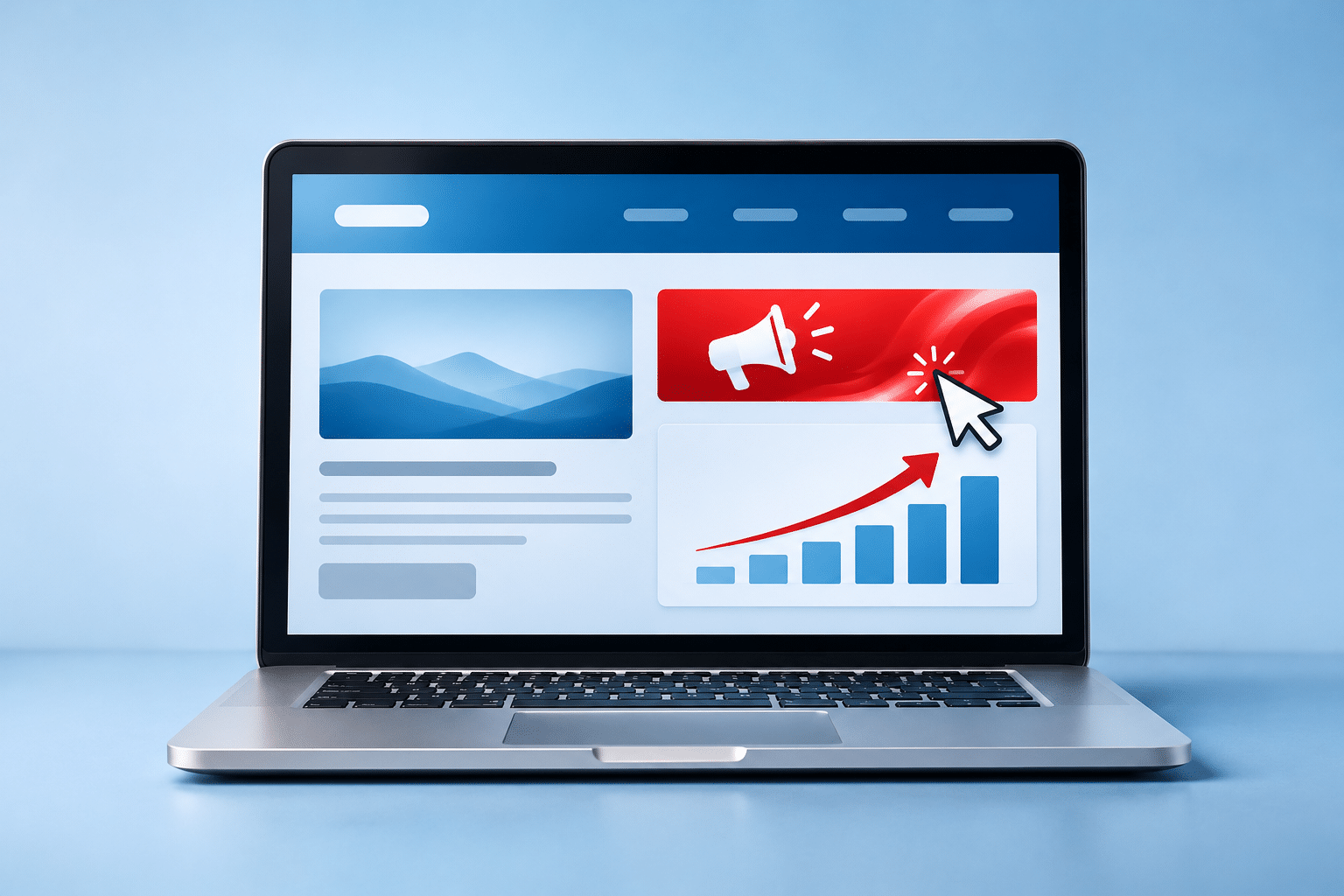
Yes, banner ads can increase website traffic by displaying clickable advertisements on other websites, apps and online platforms. When someone sees an advertisement that interests them and clicks it, they can be directed to your website or a specific landing page.
However, more traffic doesn’t automatically mean more enquiries or sales. Results depend on where your ads appear, who sees them, what your message offers and whether the destination page meets visitors’ expectations. For small businesses, banner advertising is usually worth testing with a controlled budget, a clear goal and reliable performance tracking. The most useful measure is not simply how many people click, but whether those visitors take meaningful action.
What Are Banner Ads?
Banner ads are visual advertisements displayed on websites, apps and other digital spaces. They usually contain an image, a short message, business branding and a link that takes interested visitors to another page. Some are static images, while others use movement, animation or responsive layouts that adjust to different advertising spaces.
For example, a garage might advertise its vehicle servicing on a local motoring website. The banner could show a vehicle, explain the service and invite visitors to book an appointment. Clicking the advertisement would take the person to the garage’s servicing page.
Banner advertising is often called display advertising, although display advertising is a broader category that can include several visual and interactive formats. The important difference from ordinary website content is that a banner ad is placed specifically to promote a business, service or offer.
How Do Banner Ads Bring Visitors to Your Website?
Banner advertising works by putting your message in front of people while they are browsing online. Instead of waiting for someone to search for your business, you display an advertisement in a location where potential customers may notice it.
The basic process is simple. Your advertisement appears on another website or platform, someone notices the message and decides whether to click. If they do, the link directs them to a page on your website. From there, they may read about your service, request a quote, book an appointment or leave without taking further action.
For example, a local beauty salon might advertise a particular treatment to people in its surrounding area. Some viewers may already be considering that treatment, while others may simply be browsing unrelated content. This difference matters because not everyone who sees the advertisement is ready to make a booking.
Google’s Display campaign guidance explains how display advertising can support website visits, enquiries, sales and brand awareness. The platform offers targeting and campaign settings, but those features do not guarantee a particular result.
What Are the Benefits of Banner Advertising?
Reach people who haven’t heard of your business
Banner ads can introduce your business to people who may not know it exists. A newly opened café, for example, could advertise on a relevant local publication to make nearby residents aware of its opening. Even people who don’t click may notice the business name, although that doesn’t prove they will remember it or become customers.
Promote a particular service or offer
Banner advertising can be useful when you have something specific to promote. A garage might advertise winter vehicle checks, while a cleaning company could promote its end-of-tenancy cleaning service. A focused message gives people a clearer reason to click than a general advertisement listing everything the business offers.
Choose who you want to reach
Depending on the advertising platform, you may be able to choose geographical areas, relevant website topics, placements or audience groups. This can help reduce advertising to people unlikely to need your services. However, targeting is not perfect, and campaign settings should be reviewed rather than assumed to work exactly as intended.
Test different marketing messages
You can compare different headlines, images and offers to learn what attracts attention. For example, an accountant could test a banner promoting bookkeeping support against one offering an introductory consultation. The results may help identify which message deserves further investment, provided the test receives enough useful data.
Different Types of Banner Advertising
Not all banner ads work in the same way. Some are purchased directly from a website owner, while others are delivered through advertising networks. Understanding the main options can help you choose an approach that fits your business and budget.
Static image banners
These are straightforward image advertisements with a fixed design. They may include a photograph, a short headline and a call to action. Static banners are suitable for businesses that want a clear message without animation or complicated visual effects.
Animated banners
Animated banners use movement to reveal information or attract attention. They can work well when the animation is subtle and the message remains easy to understand. Excessive movement can become distracting, particularly for people who are sensitive to animation.
Responsive display advertisements
Responsive display ads allow an advertising platform to combine supplied assets, such as images, headlines and descriptions, into different layouts. Google Ads supports responsive display formats that adapt to available advertising spaces. This can reduce the need to prepare a separate finished banner for every placement.
Direct website banner placements
You may also be able to buy advertising space directly from a local newspaper, trade publication, community website or specialist online magazine. The publisher may charge a fixed fee for a particular placement or period. Before paying, ask about its audience, advertising position, expected exposure and reporting arrangements.
Where Should a Small Business Advertise?
The best place to advertise is somewhere your potential customers are likely to spend time. A banner displayed to thousands of uninterested people may be less valuable than one reaching a smaller audience that closely matches your services.
For example, a local garage might consider a regional motoring publication, while an accountant specialising in small businesses could explore a publication read by business owners. A beauty salon may benefit from a suitable local lifestyle website. These are possible placements to investigate, not guarantees that a particular publication will deliver results.
Before buying advertising space, ask who visits the website, where those visitors are located and how the publisher measures advertisement performance. It is also sensible to check whether the website has a good reputation and whether your banner will be displayed in a visible, suitable position.
For local businesses, geographical relevance often matters more than reaching a large national audience. If you only serve customers within a small area, paying for visitors from locations you cannot cover may waste your budget.
What Makes a Banner Ad Effective?
A successful banner needs to communicate its message quickly. People browsing a website usually aren’t looking for your advertisement, so the design should make the offer understandable without requiring them to stop and study it.
Use a clear, attention-grabbing headline
Tell people what you’re offering or what problem you can solve. A cleaning company might use “Professional Office Cleaning” rather than a vague headline such as “Making Life Better”. The first explains the service immediately, while the second leaves the reader guessing.
Show one main message
Trying to promote six services in a small banner usually makes the design crowded. Choose one service, offer or customer benefit. If you need to advertise several services, consider creating separate banners so each has a clear purpose.
Include a meaningful call to action
A call to action tells interested people what to do next. Depending on the advertisement, suitable wording might include “Request a Quote”, “View Our Services” or “Book an Appointment”. Make sure the destination page allows visitors to complete the action you’re suggesting.
Make the design readable on mobile devices
Small text, crowded images and complicated layouts can become difficult to understand on a phone. Test your banner at the size it will actually appear, not only in the large design file. Keep the important message clear even when the available advertising space is limited.
Use consistent business branding
Your advertisement should look connected to your business website. Consistent colours, a recognisable logo and a similar visual style can help visitors feel confident that they’ve arrived at the right place after clicking.
Why the Landing Page Matters
One of the most overlooked parts of banner advertising is what happens after someone clicks. You might have a well-designed banner and excellent targeting, but if the destination page is confusing or unrelated to the advertisement, visitors may leave without contacting you.
Imagine an electrician advertises emergency electrical repairs. Someone clicks because they need urgent assistance, but the advertisement takes them to a general homepage listing every service the business offers. The visitor now has to search for the emergency service and work out how to make contact.
A more helpful approach would be to direct the advertisement to a page explaining the emergency service, the areas covered, relevant availability information and how to enquire. The page should also work properly on mobile devices, load reliably and make the next step clear.
This is why increasing website traffic should never be the only objective. Your website must give the visitors you attract a useful reason to stay and take action.
How Much Does Banner Advertising Cost?
Banner advertising costs depend on the platform, audience, placement, competition, campaign settings and how you are charged. There is no single price that applies to every business or advertisement.
Some advertising campaigns charge for clicks, often called cost per click (CPC). Others charge based on advertising impressions, commonly expressed as cost per thousand impressions (CPM). Direct website placements may use a fixed fee for a particular period or advertising position.
| Payment Method | What It Means | What to Consider |
|---|---|---|
| Cost per click (CPC) | You pay for eligible clicks under the platform’s charging rules. | Useful when website visits are a main objective. |
| Cost per thousand impressions (CPM) | Payment is based on groups of 1,000 advertising impressions. | Often considered for exposure and awareness. |
| Fixed placement fee | You pay an agreed amount for advertising space or time. | Ask about audience, visibility and reporting. |
For a simple illustration, imagine your banner receives 200 chargeable clicks at an average cost of £0.60 each. That would represent £120 in advertising click costs. This is a hypothetical calculation, not an average market price or a prediction of what your campaign will cost.
If those visitors produce three paying customers, you would need to consider the value of those sales, your profit margins and any additional advertising or design costs before deciding whether the campaign was worthwhile. Traffic by itself doesn’t tell you whether you’ve made money.
How Do You Know Whether Banner Ads Are Working?
The best way to judge banner advertising is to measure what happens before and after the click. Advertising platforms can report impressions, clicks and other campaign information, while suitable website analytics and conversion tracking can help you understand what visitors do next.
Impressions
Impressions indicate how often an advertisement has been displayed under the platform’s reporting rules. They help you understand exposure, but they do not necessarily mean every person noticed or read your banner.
Clicks and click-through rate
Clicks show how often people selected your advertisement. Click-through rate (CTR) compares clicks with impressions and is normally expressed as a percentage. For example, 20 clicks from 2,000 impressions would produce a 1% CTR. That figure is a calculation example, not an industry benchmark.
Conversions
A conversion is an action you want a visitor to complete, such as submitting an enquiry form, requesting a quote, booking an appointment or making a purchase. Measuring conversions helps you judge whether your advertisement is attracting useful visitors rather than just clicks.
Cost per enquiry or sale
Consider the amount spent compared with the number of worthwhile enquiries or sales generated. If a campaign costs £150 and produces five genuine enquiries, the advertising cost per enquiry is £30. Whether that is acceptable depends on how many enquiries become customers and what those customers are worth to your business.
Google’s Display Network performance guidance explains how advertisers can review placements, clicks and conversions. These measurements can help identify advertisements or placements that need improving.
Banner Ads Compared With Search Advertising
Banner advertising and search advertising can both bring visitors to your website, but they often reach customers at different stages of their buying journey. Understanding that difference can help you decide where to spend your budget.
Search advertising generally reaches people while they are actively looking for something. For example, someone searching for “emergency plumber near me” may already need help. A banner advertisement might reach the same person while they’re reading a news article, when plumbing repairs aren’t on their mind at all.
That doesn’t make banner advertising a poor choice. It simply means the advertisement may need to introduce the service, build awareness or offer a reason to learn more. Search advertising may be a stronger first option for some businesses seeking immediate enquiries, while display advertising can support awareness and carefully targeted promotions.
If your advertising budget is limited, consider which approach is most closely connected to your immediate business goal. You don’t have to use every available advertising channel at once.
Common Banner Advertising Mistakes
One common mistake is buying advertising space because a website has a large audience without checking whether those visitors are relevant. A business serving one town may gain little from paying to reach people across the country who cannot use its services.
Another mistake is creating a banner with too much information. Small advertisements aren’t suitable for long descriptions, several offers and multiple calls to action. A clear message is generally easier to understand than a crowded design.
Businesses can also waste money by sending every advertisement to their homepage. If the banner promotes a specific service, the destination page should explain that service and provide a suitable next step. This reduces unnecessary work for visitors.
Finally, avoid judging a campaign solely by impressions or clicks. A banner that attracts attention but produces no worthwhile enquiries may need different targeting, a stronger message or a better landing page. Increasing traffic is useful only when it supports a sensible business objective.
UK Privacy and Advertising Considerations
Some online advertising methods use cookies, pixels or similar technologies to measure behaviour, select advertisements or reach people who previously visited a website. UK businesses should understand the privacy requirements before using these tools.
The Information Commissioner’s Office (ICO) explains that using storage and access technologies for online advertising generally requires valid consent. This can apply to advertising tracking and profiling as well as certain measurement activities. The requirements depend on the technologies and processing involved, not simply whether an advertisement is called a banner.
If you’re considering remarketing or installing advertising tracking on your website, check what information the technology collects and whether your consent arrangements are suitable. You can read the ICO’s guidance on online advertising and privacy for further information.
Not every banner placement involves the same level of tracking. A straightforward advertisement on a relevant website may have different privacy implications from a campaign that profiles people across multiple services. If you’re unsure about your setup, seek appropriate professional guidance before activating tracking technologies.
Expert Insight From Daren Ward

Having worked in website design and online marketing since 2004, I would encourage small business owners to think beyond the banner itself. A professionally designed advertisement can help attract attention, but the real test is what happens when someone arrives on your website.
From a practical website point of view, I would normally recommend checking the destination page before spending money on advertising. Does it explain the advertised service clearly? Can someone using a mobile phone understand the offer and contact the business without difficulty? If the page doesn’t do those things, improving it may be more worthwhile than increasing the advertising budget.
I would also start with one clear offer and a controlled test rather than promoting every service at once. This makes it easier to understand which message attracts suitable visitors. If the campaign produces clicks but no meaningful enquiries, review the audience, advertisement and landing page together before deciding whether banner advertising is right for your business.
Action Checklist
- Choose one service, product or offer you want to promote.
- Decide whether your main goal is website visits, enquiries, bookings or awareness.
- Identify the people and geographical areas you want to reach.
- Research suitable advertising websites or platforms.
- Create a clear banner with one main message.
- Include a relevant call to action.
- Check that the destination page matches the advertisement.
- Test the banner and landing page on mobile devices.
- Set a budget you can afford to test without relying on immediate returns.
- Arrange suitable tracking and privacy compliance before launching.
- Review clicks, enquiries, costs and the quality of visitors.
- Improve or stop the campaign based on what the results show.
Frequently Asked Questions
1. Do banner ads really increase website traffic?
Banner ads can increase website traffic when people see an advertisement and click through to your website. However, the amount of traffic depends on your audience, placement, message and budget. Some campaigns may produce very few visits, while others attract more attention. The number of useful enquiries matters more than clicks alone.
2. Are banner ads suitable for small businesses?
Yes, banner ads can suit small businesses that have a clear offer, a suitable audience and a realistic advertising budget. They may be useful for promoting local services, seasonal offers or new products. However, they aren’t automatically the best advertising choice for every business, particularly when immediate enquiries are the main goal.
3. How much should a small business spend on banner advertising?
There is no universal starting budget. Costs depend on the advertising platform, audience, competition and charging method. Choose an amount you can afford to test, then assess the quality of traffic and any enquiries before spending more. Remember to include design costs and other campaign expenses when judging the return.
4. Where can I place banner ads?
Banner ads can appear on websites, apps, online publications and advertising networks. You may purchase space directly from a publisher or use a platform such as Google Ads. The best placement depends on where your potential customers spend time and whether the audience is relevant to your services.
5. Do banner ads improve Google rankings?
Paying for banner advertisements does not directly improve your website’s organic Google rankings. Banner ads can bring paid visitors to your website, while search engine optimisation focuses on improving your website’s ability to appear in unpaid search results. These are different marketing activities, although both can support wider business goals.
6. What size should a banner advertisement be?
Banner sizes depend on the website or advertising platform where they will appear. Some publishers require fixed dimensions, while responsive advertising formats adapt supplied assets to different spaces. Always check the current technical requirements before commissioning or uploading a design.
7. Are animated banner ads better than static banners?
Not necessarily. Animation can help attract attention or explain a message, but it can also distract people if overused. A clear static banner may perform better for a simple offer. Testing suitable designs is more reliable than assuming one format will always produce stronger results.
8. How long should I run a banner advertising campaign?
Allow enough time to gather useful information about impressions, clicks and customer actions. The right testing period depends on your budget, audience size and how often customers buy your service. Avoid making major decisions from a handful of clicks, but don’t continue spending indefinitely when a campaign shows no useful progress.
9. Can I target banner ads to people in my local area?
Many advertising platforms offer geographical targeting, which can help local businesses focus on areas they serve. You may also be able to buy advertising space from a local publication. Check the available targeting options carefully, as location settings and audience estimates don’t guarantee that every impression will reach a suitable customer.
10. Should banner ads link to my homepage or a landing page?
A dedicated service page or landing page is often more useful when the advertisement promotes something specific. It should explain the offer and provide a clear next step. A homepage can be suitable for a general business awareness campaign, but it may be less effective when someone clicks expecting details about a particular service.
Summary
Banner ads can increase website traffic by introducing your business to people browsing other websites and online platforms. They can be useful for promoting particular services, raising awareness and testing marketing messages. However, attracting visitors is only part of the job.
The most effective approach is to choose a relevant audience, create a clear advertisement and send interested visitors to a page that meets their expectations. Measure what happens after the click, including enquiries, bookings and sales, rather than focusing entirely on traffic figures.
For small businesses, a carefully planned test is usually more sensible than committing a large budget before knowing whether the advertising is producing worthwhile results.
Getting Help With Banner Design
If you’d like a professionally designed advertisement that clearly presents your business, service or offer, you can explore our banner ad design service. It’s an option for creating branded advertising graphics suitable for your chosen marketing placements.
Key Takeaways
- Banner ads can increase website visits, but traffic doesn’t guarantee sales.
- Choose advertising placements that reach people likely to need your services.
- Keep each banner focused on one clear message or offer.
- Use readable designs and test them on mobile devices.
- Send visitors to a relevant service page or landing page.
- Understand advertising costs before setting a budget.
- Measure enquiries and conversions, not just impressions and clicks.
- Check UK privacy requirements when using advertising tracking technologies.
- Start with a controlled test and improve the campaign using real results.
Found This Helpful? Share It
If you found this article useful, please share it with other business owners who might find it helpful too.
A quick share on LinkedIn, Facebook or your favourite social platform could help someone else find the advice they need.