
What Is a Sales Funnel? A Simple Guide for Small Businesses
If people visit your website, follow your business on social media or see one of your adverts, only a small number may be ready to buy straight away. Others may need more information, reassurance or time before they decide what to do.
This is where a sales funnel can help. Instead of expecting every potential customer to go from discovering your business to buying immediately, a sales funnel creates a clearer journey towards an enquiry, booking, sign-up or purchase.
For a small business, that journey doesn’t need to be complicated. A plumber might guide someone from a Google search to a service page and then to a quote request. An accountant might offer a useful guide before inviting someone to book a consultation. An online business might take someone from an advert to a landing page, email follow-up and eventual purchase.
Quick Answer
A sales funnel is a planned journey that guides potential customers from first discovering a business towards taking a desired action. The funnel is wider at the top because many people may become aware of the business, but fewer will continue through each stage and eventually enquire, book or buy. A sales funnel can include adverts, search results, social media, website pages, forms, emails, offers and follow-up messages. For a small business, the aim isn’t to pressure people into buying. It is to give potential customers the right information and next step at the right time.
What Is a Sales Funnel?
A sales funnel is the series of steps someone takes between first becoming aware of your business and becoming a customer. Those steps might happen over a few minutes, several days or much longer, depending on what you sell and how much thought the buying decision requires.
Imagine someone needs a new boiler. They may search Google, find a local heating company, visit its website, read about boiler installation, check reviews and request a quote. After receiving the quote, they may ask questions before finally booking the work. Each of those steps forms part of the customer journey.
A sales funnel plans that journey rather than leaving it entirely to chance. It considers what a potential customer needs at each stage and what sensible next action the business would like them to take.
Why Is It Called a Funnel?
The funnel shape represents the fact that the number of people usually becomes smaller as they move towards a purchase. You might have hundreds of people see a social media post or search result, fewer visit your website, fewer still request information and a smaller number eventually become customers.
That doesn’t automatically mean the funnel is failing. Not everyone who discovers your business will be the right customer, ready to buy or interested enough to continue.
A useful funnel helps suitable potential customers move forward while allowing people who aren’t interested to leave. The aim shouldn’t be to force everyone through. It should be to make the next step clear for people who genuinely have a reason to continue.
What Are the Main Stages of a Sales Funnel?
Sales funnels can be described in many different ways, but a simple small-business funnel can be understood through five stages: awareness, interest, consideration, action and follow-up.
1. Awareness
This is when someone first discovers your business. They might find you through Google Search, social media, an online advert, a recommendation, a leaflet, an email, a business directory or another website.
At this point, they may know very little about you. Your first job is therefore not necessarily to sell immediately. It is to help them understand who you are, what you offer and whether your business could be relevant to their problem.
2. Interest
The person decides to find out more. They may visit your website, read a service page, watch a video, look at your work, read reviews or download useful information.
For example, someone planning a garden makeover might find a landscaper through Google and then spend time looking at examples of previous work. Their interest has increased, but they may still be comparing several businesses.
3. Consideration
At the consideration stage, the potential customer is thinking more seriously about taking action. They may compare prices, services, reviews, experience, guarantees, availability or different options.
Your business needs to answer the questions that could stop them moving forward. Clear service information, FAQs, testimonials, pricing guidance where appropriate and an easy way to ask questions can all help.
4. Action
This is the point where the person takes the main action your funnel was designed around. Depending on your business, that could mean requesting a quote, booking an appointment, making a purchase, starting a free trial, calling your business or completing an enquiry form.
The action needs to be simple. A potential customer who has decided to contact you shouldn’t have to search around the website wondering what to do next.
5. Follow-up
A funnel doesn’t necessarily end when someone fills in a form or makes an initial enquiry. Follow-up can be an important part of the process, particularly where customers don’t make instant buying decisions.
This might involve answering questions, sending requested information, providing a quote, confirming an appointment or sending useful email follow-ups. Existing customers can also be encouraged to return when they genuinely need another relevant product or service.
What Does a Sales Funnel Look Like in Practice?
There is no single sales funnel that works for every business. The right structure depends on what you sell, how customers find you and how they normally make a decision.
Consider a cleaning company trying to generate enquiries for regular office cleaning. A simple funnel could look like this:
- A local business owner searches for office cleaning services.
- They discover the cleaning company through search results or an advert.
- They visit a page specifically explaining the office cleaning service.
- The page answers common questions about the service, areas covered and how the process works.
- The visitor sees reviews or other useful trust information.
- They complete a short form requesting a quote.
- The cleaning company responds and discusses the customer’s requirements.
- The potential customer decides whether to proceed.
That is a sales funnel even though it doesn’t contain complicated software, dozens of emails or aggressive sales tactics. It simply gives the customer a logical path from discovery to enquiry.
Is a Sales Funnel Different From a Normal Website?
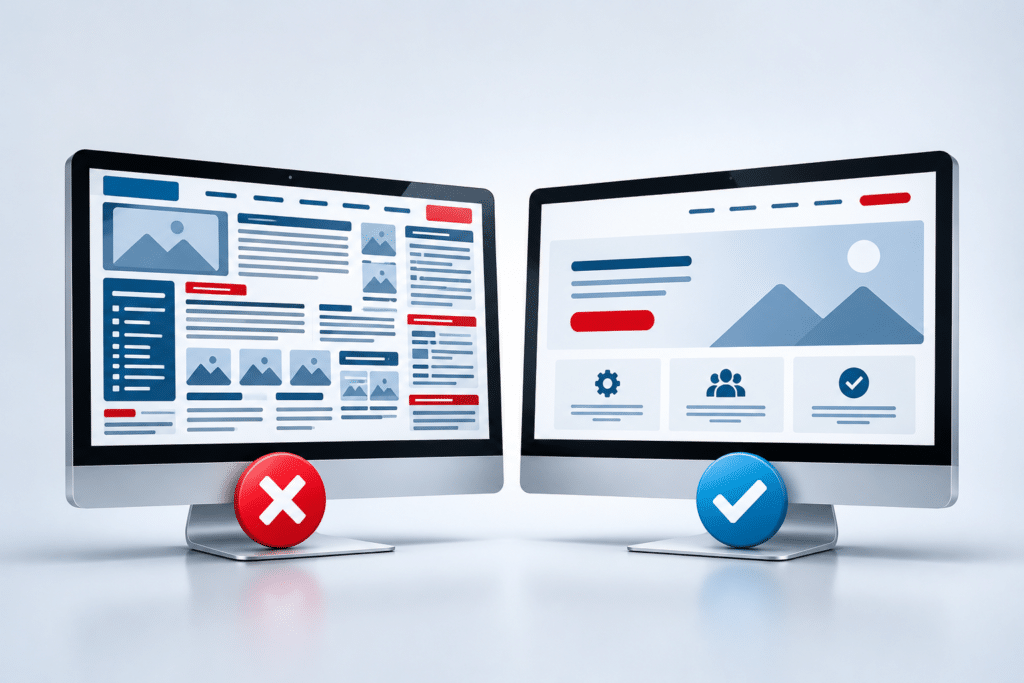
Yes, although the two can work together. A normal business website often serves several purposes and several types of visitor. It may contain a homepage, service pages, an about page, blog articles, contact information and other useful resources.
A sales funnel is usually more focused on one particular journey or goal. It may direct someone towards a specific service, offer, enquiry, sign-up or purchase while reducing unnecessary distractions.
| Business Website | Sales Funnel |
|---|---|
| May serve several audiences | Usually targets a more specific audience or need |
| Contains multiple navigation choices | Usually provides a more guided journey |
| May explain the whole business | Often concentrates on one offer or objective |
| Visitors choose where to go next | The next action is usually made very clear |
| Can support many business goals | Usually focuses on a particular conversion goal |
You don’t necessarily have to choose between them. A business website can contain or connect to individual funnels for particular services, campaigns or offers.
If you need a more focused online journey for a particular service or offer, sales funnel website design can help structure the pages and steps around the action you want suitable visitors to take.
Does Every Small Business Need a Sales Funnel?
Every business has some form of customer journey, but not every small business needs a complicated dedicated sales funnel. For some businesses, a clear website, strong service pages and an easy enquiry process may already provide the journey customers need.
A dedicated funnel becomes more useful when you are promoting a specific service, running advertising, collecting leads, selling something online or trying to guide a particular type of visitor towards one clear action.
For example, a beauty salon advertising one particular treatment could send interested people to a focused page about that treatment rather than the general homepage. A business promoting an ebook could use a landing page to collect sign-ups and then send the requested resource by email.
The question isn’t really, “Do I need a funnel?” A better question is, “What journey do I want a potential customer to take, and is that journey currently clear?”
What Makes a Good Sales Funnel?
A good funnel isn’t measured by how many pages, emails or clever features it contains. It should make the customer’s journey easier to understand while helping the business focus on a meaningful goal.
A clear audience
You need to know who the funnel is for. A generic message aimed at everybody can make it difficult for a visitor to recognise that the offer is relevant to them.
One main goal
Decide what you actually want people to do. If a page asks visitors to request a quote, download a guide, join a newsletter, follow three social accounts, read the blog and browse six other services, the main action can become lost.
A clear reason to continue
People need a reason to move from one stage to the next. That might be useful information, an explanation of a service, evidence that your business is trustworthy or a clear answer to an important question.
Trust
A funnel should help people feel confident about the business behind it. Genuine reviews, clear contact information, transparent explanations, professional presentation and sensible answers to common questions can all help someone make a more informed decision.
A simple next step
Don’t make interested customers work out what to do. Buttons, forms and calls to action should explain the next step clearly.
Follow-up that matches the enquiry
Getting a lead is only useful if the business handles it properly. If someone requests a quote, asks a question or books a call, the next part of the process should match what they were told would happen.
Common Sales Funnel Mistakes
One common mistake is making a funnel far more complicated than the customer journey requires. Small businesses can end up buying multiple tools, building long email sequences and creating numerous pages before they have established whether customers actually need those steps.
Another mistake is concentrating on the software rather than the customer. A funnel builder, email platform or automation tool can help run a process, but the technology doesn’t automatically make the underlying journey useful.
Businesses can also ask for too much too early. Someone who has only just discovered your business may not be ready to book an appointment or make a purchase. Giving them useful information first may be more appropriate.
Finally, don’t assume that getting someone to complete a form means the job is finished. Slow responses, confusing quotes or poor follow-up can lose a potential customer after the online funnel has done its part.
Expert Insight From Daren Ward

Daren Ward – Founder, A to Z Website Solutions
From my experience working with business websites since 2004, I think one of the biggest misunderstandings about sales funnels is that they have to be complicated. They don’t. A simple, well-planned journey can often make far more sense than adding lots of steps just because funnel software allows you to.
I would normally start by looking at what the business actually wants the visitor to do. Then I would work backwards. What does that person need to know before they are comfortable taking that action? What questions might stop them? What could make the next step confusing?
For a local business, the result could be surprisingly simple: the right visitor reaches the right page, quickly understands the service, gets answers to their main questions, sees enough information to trust the business and has a clear way to make an enquiry. The funnel should support the buying decision rather than getting in its way.
Sales Funnel Action Checklist
- Choose one product, service or offer you want the funnel to support.
- Identify the type of customer you want to reach.
- Decide the main action you want that person to take.
- Write down how people are likely to discover the offer.
- List the main questions they may have before taking action.
- Check whether your website answers those questions clearly.
- Make sure the next step is obvious on both desktop and mobile.
- Test every form, button, booking link or checkout step yourself.
- Decide how enquiries or leads will be followed up.
- Review what is happening and improve weak stages rather than adding unnecessary complexity.
Frequently Asked Questions About Sales Funnels
Can a small business use a sales funnel?
Yes. Sales funnels aren’t limited to large companies or online businesses. A plumber, accountant, cleaner, salon, electrician or other small business can use a simple funnel to guide potential customers from discovering a service towards making an enquiry or booking.
Do I need special sales funnel software?
Not necessarily. A basic funnel can sometimes be created using your existing website, landing pages, contact forms and email system. Specialist software may be useful for more complicated journeys, but it shouldn’t be added unless it solves a real need.
Is a landing page the same as a sales funnel?
No. A landing page is normally one focused page designed around a particular action. It can form part of a wider sales funnel, which may include the traffic source, landing page, form, emails, booking process, checkout and follow-up.
Can my existing website be part of a sales funnel?
Yes. Your existing website can play an important role in a sales funnel. Visitors might enter through a service page, blog article or landing page before moving towards a quote request, booking or purchase.
What is the top of a sales funnel?
The top of the funnel is where potential customers first become aware of your business or offer. This could happen through Google, social media, advertising, recommendations, email, content or other marketing channels.
What is the bottom of a sales funnel?
The bottom of the funnel is where a potential customer is closer to taking the main action. Depending on the business, this might mean requesting a quote, booking an appointment, signing an agreement or completing a purchase.
How long should a sales funnel be?
A sales funnel should be only as long as the customer’s decision requires. A simple local service enquiry might need only a few steps, while a more expensive or complicated purchase may require more information and follow-up before someone is ready to proceed.
Can a sales funnel work without paid advertising?
Yes. People can enter a funnel from organic search, social media, referrals, email, blog articles, direct website visits and other sources. Paid advertising is one possible source of traffic, not a requirement.
Can a sales funnel guarantee more sales?
No. A funnel cannot guarantee enquiries or sales. Results can depend on factors including the offer, audience, traffic quality, pricing, competition, trust, website experience and how enquiries are handled. A well-planned funnel can make the customer journey clearer and easier to measure.
Should I build several sales funnels?
Only when there is a useful reason. Different products, services or audiences may benefit from separate journeys, but creating multiple funnels before you have tested a simpler approach can add unnecessary work and complexity.
Summary
A sales funnel is simply a planned route from discovery to action. It helps you think about what potential customers need at each stage rather than expecting everyone who discovers your business to buy immediately.
For many small businesses, the most effective funnel may be fairly simple. Someone finds the business, reaches the right information, understands the offer, gets answers to their questions, sees reasons to trust the business and has a clear way to take the next step.
Start with the customer journey before thinking about software. Work out who you want to reach, what action you want them to take and what they need to know before they feel ready to take it.
Need Help Creating a Sales Funnel?
If you have an offer or service but aren’t sure how to turn it into a clear online customer journey, you can learn more about our Sales Funnel Website Design service. A to Z Website Solutions has been providing website design and online marketing services since 2004.
Key Takeaways
- A sales funnel guides potential customers from discovering your business towards a specific action.
- The funnel gets narrower because not everyone who discovers a business will become a customer.
- A simple funnel can be just as useful as a complicated one.
- Your website can form part of the sales funnel rather than being separate from it.
- Each stage should give the customer the information needed to decide whether to continue.
- The main next step should be clear and easy to complete.
- Follow-up matters after someone enquires or shows interest.
- Start with the customer’s journey and business goal before choosing funnel software.