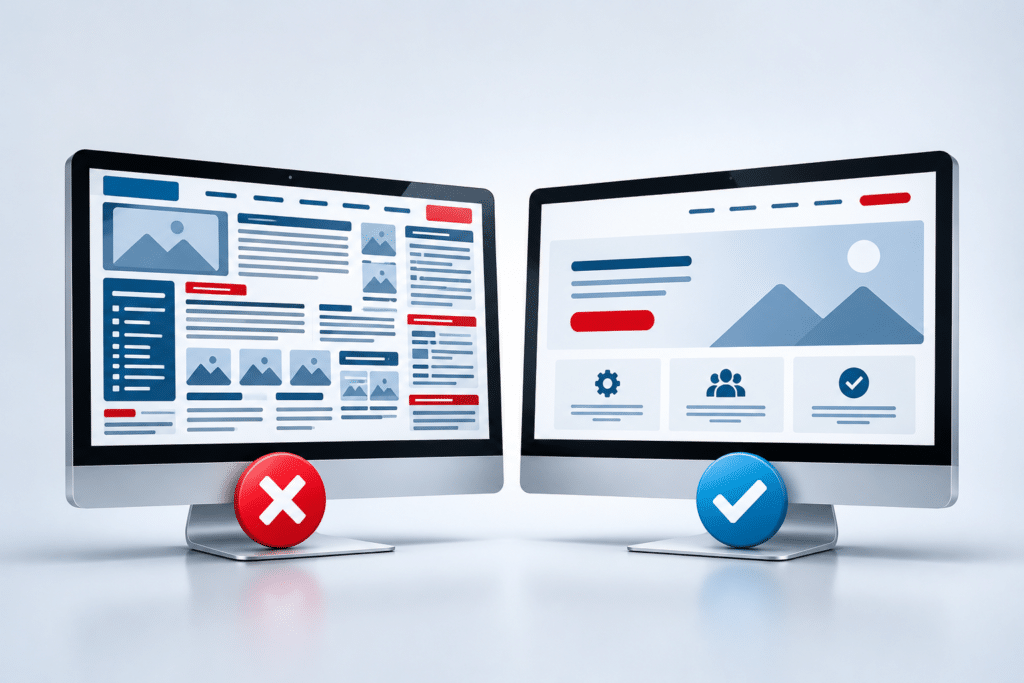

Website or Social Media: Which Matters More for a New Business?
When you’re starting a business, every expense needs a reason. You might be wondering whether to pay for a website or put your effort into social media first. A social profile can be quick to set up, while a website gives you somewhere to explain your business properly. Both can help you attract customers, but they do different jobs.
The website or social media decision should start with how your customers choose a business like yours. Someone looking for an accountant may want detailed information before making contact. Someone choosing a cake maker might first be drawn in by photos. For many new businesses, the sensible approach is a small, useful website supported by one well-chosen social channel.
Website or Social Media: What Does Each Do?
A website lets you organise information around the questions customers need answered. You can explain each service, show examples of your work and provide a clear way to request a quote or book. Visitors can move through that information at their own pace. You have more control over how it is presented, although your website still needs hosting, maintenance and suitable access arrangements.
Social media gives you a place to share updates, show your personality and interact with people. Customers can comment, ask questions and share your content with others. It can be especially useful when your work is easy to demonstrate through photos or video. However, an older post may be harder to find than a clearly labelled service page, and publishing a post does not mean every follower will see it.
| Business need | Website | Social media |
|---|---|---|
| Explain your services | Dedicated pages keep detailed information organised. | Posts and profile details can introduce services, but information may be spread out. |
| Show your work | A gallery or examples page gives customers a lasting reference. | Photos and videos can encourage reactions, sharing and conversations. |
| Help customers find you | Useful pages can appear in search results, although visibility takes work. | Discovery can come through sharing, recommendations, platform search and advertising. |
| Receive enquiries | Forms, phone links and booking tools can guide the next step. | Messages and comments can start conversations, but need regular checking. |
| Control presentation | More choice over layout, navigation and the route to contacting you. | Presentation and features depend on the platform. |
| Keep information current | Update the relevant page when something changes. | Update profile information and check that older posts do not cause confusion. |
Neither option has exclusive rights to building trust or generating enquiries. A helpful social profile can make a business look credible, while an unclear website can put people off. The quality of your information and the ease of contacting you matter more than simply having an account or a domain name. Your choice should support the way your customers actually buy.
When a Website Should Come First
Your customers need answers before they enquire
A website should take priority when customers need to understand your services, coverage, process or suitability before contacting you. Consider a cleaning company offering regular domestic cleaning, end-of-tenancy cleaning and office cleaning. Each service raises different questions about what is included and how quotes work. Clear pages help customers find the right information without searching through months of posts.
You want to reach people looking for a service
A person searching for an electrician in their area may already need help. A useful website can explain whether you offer the work they need and how to get in touch. Search engine optimisation, often shortened to SEO, means helping search engines understand your pages and their relevance. Google’s SEO Starter Guide explains the basics, but publishing a website does not guarantee a ranking or a steady stream of customers.
Your business needs more than a short introduction
If you offer several services, handle higher-value work or need to explain your qualifications, a social profile may feel restrictive. An accountant, for example, might need to explain support for sole traders, bookkeeping and year-end accounts. A website gives each subject a clear place and helps visitors compare their needs with your offer. It also gives referrals somewhere useful to go when they want to check you out.
When Social Media Can Come First
Social media can be a sensible starting point when you’re testing demand before committing to a larger setup. A cake maker could show a small range of designs, explain how ordering works and invite enquiries. A beauty therapist could share examples of treatments and available appointments. In these situations, pictures and conversations may help you learn what people want.
It can also deserve early attention if you already have a relevant audience. Perhaps you’ve built local connections or have people waiting for your launch. That gives you a starting point for sharing your offer, although interest still needs to turn into actual bookings or purchases. Watch what people do after seeing your content rather than judging demand by compliments alone.
Social media is particularly useful for businesses that have something worthwhile to show regularly. Fresh work, useful demonstrations and answers to common questions can give people a reason to follow you. Choose a channel your likely customers use and a content format you can maintain. Trying to keep five accounts active while starting a business can leave you with less time to serve customers.
Starting with social media does not mean postponing a website indefinitely. Set a clear review point, such as when enquiries become regular or customers repeatedly ask for the same information. A simple website can then reduce repeated explanations and make the buying process easier. You can build it around what you’ve learned from genuine conversations.
Compare the Cost of Money and Time
A basic social account can usually be started without a setup fee, but running it still takes time. Taking photos, writing captions, answering messages and planning posts all use hours you could spend elsewhere. Advertising or outside help adds another cost if you choose to use it. A channel that feels free can become expensive if it takes a lot of effort and brings few suitable enquiries.
A website has costs too, including its initial creation, domain name, hosting and ongoing care. You may also pay for content, booking features or professional support. Ask what is included and what you will need to pay later before agreeing to a package. A low starting price is only useful if the finished website does the job your business needs.
Compare both options against a business result. That might be quote requests, paid appointments or orders rather than visitors and followers. A small audience containing likely customers can be more useful than a large audience with little interest in buying. Equally, a polished website has limited value if nobody reaches it or its contact form fails.
How the Two Can Work Together
Customers do not always discover and choose a business in the same place. Someone might see a hairdresser’s work on social media, visit the website to check services and then book. Another person might find a plumber through search and look at recent social posts before calling. Each channel can answer a different question along the way.
The connection should be easy to follow. A post about a particular treatment should lead to information about that treatment where possible. A post promoting a service should explain the next step, whether that is booking, calling or requesting a quote. Sending interested people to an unrelated page creates extra work for them.
Your details should also agree across channels. Different phone numbers, old opening hours or conflicting prices can make customers hesitate. Keep core information on your website current and check your social profiles when it changes. Useful website content can also provide material for posts, so you do not need to invent every update from scratch.
Where Local Search Fits In
For a business serving nearby customers, a Google Business Profile may deserve attention alongside your website and social account. It is a separate listing that can help people find business information through Google Search and Maps. Google’s Business Profile guidelines explain that eligible businesses generally have a location customers can visit or travel to customers. Online-only businesses are not generally eligible.
If your business qualifies, keep its category, contact details, hours and service area accurate. A plumber who works at customers’ addresses should follow Google’s service-area rules rather than treating a home address as a public premises. Think of the profile as another route customers may use to reach you. It supports your wider presence rather than removing the need for clear information elsewhere.
A Practical Plan for Your First Month
Week 1: Make your offer clear
Write down who you help, what you offer and where you work. Decide what you want an interested customer to do next. Prepare a short explanation of your service and gather genuine photos or evidence of your work where available. These basics improve both a website and a social profile.
Week 2: Put the essentials online
Create a website that matches the complexity of your offer. One clear page may suit a business with one simple service, while several distinct services may need separate pages. Include contact details, useful service information and a working enquiry route. Set up one relevant social profile and, if eligible, your Google Business Profile.
Week 3: Give people a reason to look
Share information that helps customers understand your work. Show an example, explain your process or answer a common question. Link to the relevant website information when it helps someone take the next step. You can also share your website with existing contacts and people who have already shown interest.
Week 4: Review enquiries and obstacles
Ask new customers how they first heard about you and what they checked before making contact. Record suitable enquiries, bookings and sales rather than relying only on likes. Look for repeated questions that your website could answer more clearly. One month provides an early check, although search visibility and other marketing results may need longer to assess.
Frequently Asked Questions
Can I start a business without a website?
Yes, you can begin through referrals, social media or direct contact. This may suit a small test of demand or a business with a ready audience. Review the arrangement when customers need more information or the enquiry process becomes difficult to manage.
Is a Facebook page enough for a new business?
It may be enough initially if customers can understand your offer and contact you easily. However, it provides less flexibility than a website for organising detailed service information. Its usefulness also depends on whether your customers use Facebook and whether you keep the page current.
Do I need a large website at launch?
No, your website should match what customers need to know. A simple service may only need a focused starting website, while different services may need their own pages. Spend on clarity and a working contact process before adding features without a clear purpose.
Which social media platform should I choose?
Choose based on your customers and the content you can produce consistently. A business with visual work may benefit from photo or video content, while another may find local conversations more useful. Ask existing contacts where they look for businesses like yours instead of choosing purely by popularity.
Will a website bring customers straight away?
Not necessarily, because people still need to find it. Referrals, social posts and other promotion can send visitors there, while search visibility can take time. The website also needs to explain your offer clearly and make contacting you straightforward.
Should I pay for social media advertising first?
Only after checking that your offer and enquiry process are ready. Start with a defined audience, a clear goal and a budget you can afford to test. Judge the result by suitable enquiries or sales, because paying for attention does not guarantee customers.
Can I use social media as my Google Business Profile website link?
Google’s guidelines say the website link should represent the actual business location and should not redirect to a social media page. Use the appropriate fields for each type of information. Check the current guidelines when setting up your profile rather than treating every link field as interchangeable.
What if I already get customers through word of mouth?
A website can still give referred customers somewhere to check your services and contact you. Social media can help them see recent work or get a feel for your business. Neither needs to replace referrals; both can support the decision that follows a recommendation.
How do I know which channel is working?
Record enquiries and sales, then ask customers how they found you. Also ask what they looked at before choosing you, since several channels may contribute. This gives you a more useful picture than comparing follower numbers with website visitor numbers alone.
Summary
For many new businesses, a useful website deserves priority as the place where customers can understand the offer and take the next step. Social media adds discovery, conversation and a way to show current work. A business testing a visual product or starting with an existing audience may reasonably begin with social media. The order should reflect customer needs, available resources and the way you sell.
Start with a manageable setup and improve it using real customer questions. Keep the information accurate, test the contact process and record what brings suitable enquiries. Spending more becomes easier to justify when you understand what is helping people choose your business. You do not need to be everywhere to make a useful start.
Need Help Getting Your Business Online?
If you’re unsure what your new business needs, A to Z Website Solutions can help you plan a website around your services and customers. We’ve been providing website design and online marketing services since 2004. Get in touch to discuss a practical starting point, whether you need a simple website or a clearer plan for connecting your website and social media.